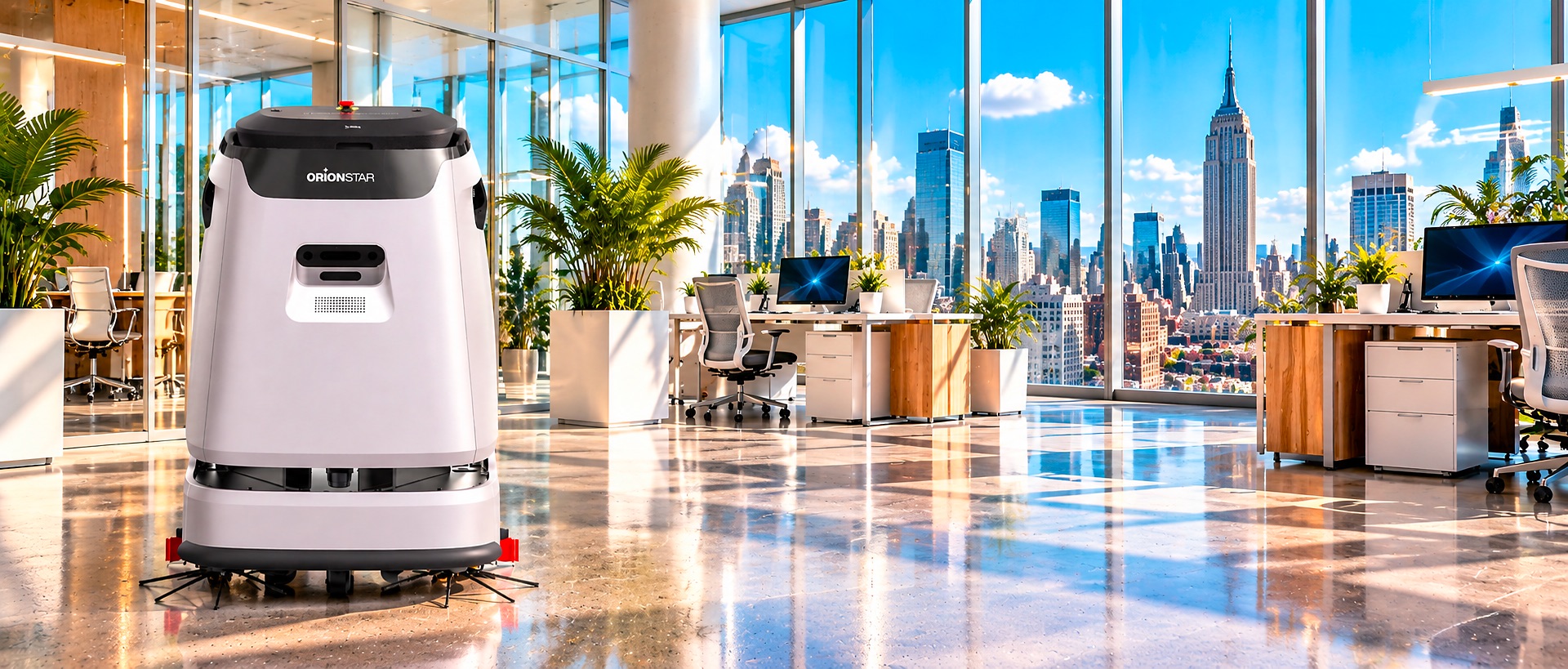
Pudu PUDU T300 Tray (PUDU T300 Tray)

In stock
- BRAND:
- PUDU ROBOTICS
- PART #:
- PUDU T300 Tray
- ORIGIN:
- China
- AVAILABILITY:
- SUBJECT TO AVAILABILITY
- SKU:
- Pudu-PUDU-T300-Tray
Pudu PUDU T300 Tray (PUDU T300 Tray)
A transport robot is usually bought for one job and kept on that job for years. Change the job, and the robot often sits idle. The Pudu PUDU T300 Tray (PUDU T300 Tray) takes a different approach: its shelves are modular and, per the manufacturer, come on and off without tools, so the same chassis can be set up for loose cartons on Monday and bins of parts on Tuesday. Beneath the trays sits the T300 platform, a heavy-load autonomous mobile robot that navigates with VSLAM and Lidar SLAM. The result is less a fixed delivery vehicle and more a mobile shelving unit that adapts to whatever the floor needs moved next.
Robots USA sells the PUDU T300 Tray to business customers and supplies it as a full project, not just a crate at the loading dock. Robots USA prepares the quotation, checks the configuration and every published figure against the current Pudu datasheet, arranges delivery to your facility and stays your point of contact for support after the robot goes into service.
Background
Pudu Robotics: a manufacturer at scale
Pudu Robotics reports that it has shipped more than 90,000 units and has a presence in more than 60 countries and regions. For an industrial buyer, that footprint is a practical signal rather than a marketing number: a manufacturer whose robots already run in many kinds of buildings has had to solve for different floor surfaces, door layouts and integration requests. The company is widely known for service robots in hospitality and commercial cleaning, and the T300 Series extends that experience into heavier indoor logistics. You can browse the wider lineup in our Pudu category.
One platform, five configurations
According to the manufacturer, the T300 Series is offered in Standard, Lifting, Conveyor, Tray and Towing versions, with the Conveyor available in single-layer and double-layer forms. Each version puts a different top module on a shared base. The Tray version is the one designed for goods that are picked, stacked and unloaded by hand: Pudu describes a multi-layer adjustable structure built from high-strength metal with textured surfaces, intended to make better use of the available load capacity than a single flat deck would. The modular, tool-free tray design is presented as a way to meet the need for rapid scenario switching on the same site.
Technical Specifications
| Specification | Value |
|---|---|
| Version | T300 Tray |
| Tray design | Multi-layer adjustable structure, modular, tool-free installation and disassembly |
| Tray construction | High-strength metal materials, textured surfaces |
| Maximum load per layer | 100 kg (220 lbs) |
| Total maximum load capacity | 300 kg (661 lbs) (including the tray) |
| Load space dimensions | 620 mm × 500 mm (24.4 in × 19.7 in) |
| Layer height (bottom to top) | 300 mm (11.8 in) / 400 mm (15.7 in) / 400 mm (15.7 in) |
| Machine weight | 103kg |
| Max. speed | 1.2m/s |
| Path clearance | ≥60cm |
| Run-time (full load) | 8h |
| Run-time (no load), T300 Series | 12h |
| Charging time, T300 Series | 2h(0% to 90%) |
| Threshold overcoming height | 20mm |
| Groove crossing width, T300 Series | 35mm |
| Dimensions, T300 Series | 835mm * 500mm * 1350mm |
| Navigation methods, T300 Series | VSLAM & Lidar SLAM |
| Safety standard, T300 Series | Meets ISO 3691-4 guidelines for industrial vehicles |
| Multi-robot scheduling, T300 Series | Up to 20 robots in one environment |
| IP rating | Not published |
| Operating temperature range | Not published |
| Wireless connectivity standards | Not published |
| Battery swap time | Not published |
| Noise level | Not published |
| Package contents | Not published |
All figures are as published by the manufacturer from a single source and are confirmed against the current datasheet at quotation; the unpublished items, including IP rating, operating temperature range, wireless standards, battery swap time, noise level and package contents, are likewise confirmed at quotation.
What does the tray version add to the T300 platform?
The answer is shelving that thinks like a cart. A flat-deck transport robot works best when loads arrive already consolidated on a pallet, a tote stack or a custom rack. Many indoor workflows don't look like that: they involve a mix of boxes, kits and loose items that someone picks up and sets down by hand. The tray structure gives those items a home on separate layers, with a reported maximum of 100 kg (220 lbs) per layer and 300 kg (661 lbs) in total, tray included.
Layer spacing matters as much as weight. Per the published specification, the layers sit at 300 mm (11.8 in), 400 mm (15.7 in) and 400 mm (15.7 in) from bottom to top, over a load space of 620 mm × 500 mm (24.4 in × 19.7 in). That geometry tells a buyer quickly whether their standard cartons and bins will fit without repacking. The textured metal surfaces are described as part of the design, which suits goods that should stay put as the robot turns and brakes.
The modular construction is the other key difference. Because the trays are reported to install and come apart without tools, the robot is not locked into one shelf layout. A site that changes product mix, or wants to reassign the chassis to a different task, can reconfigure rather than replace. The trade-off is weight: the published machine weight for the Tray version is 103kg, heavier than the base figure the manufacturer lists for the Standard version, so floor loading and elevator capacity deserve a check during planning.
How does the PUDU T300 Tray fit into an existing building?
Autonomy is only useful if the robot can get where the goods need to go. The T300 Series is described as navigating with a combination of VSLAM and Lidar SLAM, an approach generally used to keep localization stable in spaces where layouts shift or visual landmarks change. For the Tray version, the manufacturer quotes a path clearance of ≥60cm, a threshold overcoming height of 20mm and, for the series, a groove crossing width of 35mm, which together frame the doorways, ramps and floor joints it is designed to handle.
Pudu also describes a set of integration features for the series: elevator control, e-gate access, pagers and app-based calling, software API interfaces for connecting to existing systems, plus external power supply ports and USB outlets. Multi-robot scheduling is reported to dispatch up to 20 robots in one environment, so a pilot with a single unit can grow into a fleet on the same site. On safety, the series is stated to meet ISO 3691-4 guidelines for industrial vehicles, the reference standard most safety teams will ask about first. Robots USA verifies each of these points against your building and your systems before the quotation is finalized.
Who is the PUDU T300 Tray for?
The Tray version is aimed at operations where people still load and unload by hand, but where walking the goods across the building is wasted time. Manufacturers moving kits and components from stores to assembly lines are an obvious fit, as are warehouses shuttling picked orders to packing or shipping areas. Hospitals, laboratories and large institutional kitchens that run repeated supply loops between floors may also benefit, especially where elevator integration removes the need for a person to ride along.
It is less suited to sites whose loads already travel on pallets or carts, or that need automated transfer at the destination. According to the manufacturer, the T300 Series also includes Lifting, Conveyor and Towing versions for those cases, and Robots USA can advise which configuration matches your process. For front-of-house delivery in restaurants and hotels, Pudu's lighter service robots in the Pudu range are generally the more natural choice.
What is the PUDU T300 Tray used for?
- Line-side replenishment: carrying parts and kits from stores to production cells on a fixed or on-demand route.
- Order transfer: moving picked items from pick zones to packing stations without manual cart runs.
- Work-in-progress movement: shuttling partially finished goods between process steps on separate shelves.
- Multi-floor supply loops: using elevator control to deliver materials between levels in hospitals, labs or offices.
- Returns and empties collection: bringing empty bins and containers back to their origin on scheduled runs.
- Fleet-based intralogistics: running several units under shared scheduling as part of a larger automated transport network.
Pricing and Availability
Robots USA does not publish a fixed price for the PUDU T300 Tray, because the right configuration depends on your routes, integration needs and fleet size. Request a quotation and our team will confirm the specification, including the items the manufacturer has not yet published, against the current Pudu datasheet. Delivery, customs and support are arranged together with your quotation. The quote request form for the Pudu PUDU T300 Tray (PUDU T300 Tray) is available on this page.
Frequently Asked Questions
How much can the PUDU T300 Tray carry?
Per the published specification, each layer bears up to 100 kg (220 lbs) and the total maximum load is 300 kg (661 lbs), tray included. Robots USA confirms these figures against the datasheet at quotation.
Do the trays need tools to install or remove?
The manufacturer states that the modular design allows tool-free installation and disassembly, intended for quick switching between scenarios.
How long does it run on a charge?
The published full-load run-time for the Tray version is 8h, and the series lists 12h with no load and a charging time of 2h(0% to 90%). Battery swap time has not been published and is confirmed at quotation.
Can it use elevators and automatic doors?
Pudu describes elevator control and e-gate access among the T300 Series integration options. Compatibility with your specific elevator and door systems is checked during project planning.
What safety standard does it follow?
The T300 Series is stated to meet ISO 3691-4 guidelines for industrial vehicles. Robots USA can supply the manufacturer's documentation with the quotation.
Is it rated for dusty, wet or cold environments?
The manufacturer has not published an IP rating or an operating temperature range for this product. Both are confirmed at quotation before any commitment.
Where can I buy the PUDU T300 Tray and what does it cost?
You can buy the PUDU T300 Tray from Robots USA, which quotes, supplies and supports it. Pricing is provided on request through a quotation tailored to your configuration and site.
Summary
The value of the Pudu PUDU T300 Tray (PUDU T300 Tray) lies in not committing a facility to a single way of moving goods. Its modular, tool-free trays carry up to 100 kg (220 lbs) per layer on a T300 base that navigates with VSLAM and Lidar SLAM, integrates with elevators and gates, and is stated to meet ISO 3691-4 guidelines. When the job changes, the shelves can change with it. Robots USA confirms every figure against the current datasheet, settles the open specifications and supports the robot after delivery. For a transport robot that keeps pace with a changing operation, this page is the starting point.