AgiBot D1 USA
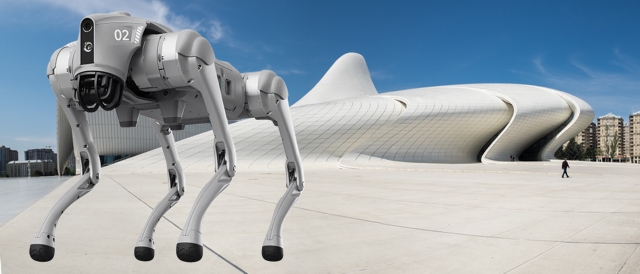
The AgiBot D1 Series is a family of compact, all-terrain quadruped robots (commonly referred to as robot dogs) developed by AGIBOT Innovation Shanghai Technology Co., Ltd., the world's highest-volume humanoid robot manufacturer by units shipped in 2025. While AgiBot is primarily known for its bipedal humanoid product lines, the D1 Series represents the company's dedicated legged platform for environments and applications where four-legged locomotion provides meaningful operational advantages over both wheeled and bipedal alternatives: uneven outdoor terrain, stairwells, slopes, debris-laden industrial spaces, and search environments where unpredictable ground conditions make wheeled robots unreliable.
AgiBot D1 Series USA: The All-Terrain Quadruped Robot Family for Inspection and Research
AgiBot and the D Series
AgiBot was founded in February 2023 in Shanghai by Deng Taihua (CEO) and Peng Zhihui (CTO), both previously with Huawei's Genius Youth Program. The company became the world's highest-volume humanoid robot manufacturer in 2025 with more than 5,100 units shipped according to analyst firm Omdia. Its flagship product lines, the A2, X2, and G2 Series, address service, entertainment, and industrial manipulation respectively. The D Series fills a distinct operational gap within that portfolio: no other AgiBot platform can navigate stairs, slopes, uneven outdoor terrain, or access routes where the robot must move over irregular ground, positions that have historically been the preserve of quadruped robot dogs in commercial robotics.
The D Series Within the AgiBot Ecosystem
Within AgiBot's AIMA (AI Machine Architecture) open development ecosystem, announced at the April 2026 Partner Conference, the D Series platforms are supported by the same Genie Sim 3.0 simulation platform (built on NVIDIA Isaac Sim) and URDF modeling standard as the rest of the AgiBot fleet. This integration means that developers working across multiple AgiBot robot types can apply the same simulation workflows and many of the same software libraries to the D Series, reducing the additional learning curve of adding a quadruped to an organization's robot fleet.
D1 Series Variants
D1 Edu: The Education and Entry Development Platform
The D1 Edu is the entry-level variant within the D1 family, designed specifically for STEM education programs, introductory robotics courses, and students or developers taking their first steps with legged robot platforms. It provides the same physical capability foundations as the D1 Pro, including reinforcement learning gait control, 48 Nm peak joint torque, and the core sensor suite, but is packaged and priced for educational use.
The D1 Edu supports secondary development through an open interface, allowing students to write control programs, customize gait behaviors, and experiment with perception integration. Its standing dimensions of approximately 610 by 370 by 406 millimeters and folded dimensions of approximately 680 by 370 by 115 millimeters make it compact enough to transport in a standard carrying case, enabling practical deployment in classrooms, laboratories, and field trips.
The D1 Edu supports a camera field of view of DFOV 122 degrees, HFOV 111 degrees, and VFOV 70 degrees, with real-time image transmission capability that allows instructors and students to view what the robot's camera sees during operation. Its battery is rated at 5 Ah with a nominal 4.6 Ah capacity at 43.2 V. The operating temperature range of 0 to 40 degrees Celsius covers standard indoor educational and laboratory environments.
D1 Pro: The Dynamic Mobility and Demonstration Platform
The D1 Pro is the standard commercial performance platform within the D1 family, designed for buyers who need a compact, agile quadruped robot for technology demonstrations, academic trials, mobility testing, light mobile robotics projects, and corporate showroom presentations. It shares the D1 Edu's physical dimensions and battery specification but is positioned as a ready-to-deploy product for users who want a fully operational robot with a broad preset motion library rather than a blank development slate.
The D1 Pro's preset motion behaviors include standard actions such as standing, lying down, kneeling, and maintaining low or high posture modes, alongside special actions including jumping behaviors and demonstration moves such as waving. These preset behaviors make the D1 Pro practical for immediate deployment in exhibitions, events, and patrol demonstrations without requiring custom development. Its maximum running speed of 3.7 meters per second (approximately 8 miles per hour or 13.3 kilometers per hour) and 8-core high-performance onboard CPU support both dynamic locomotion demonstrations and basic perception and navigation tasks.
The D1 Pro carries an IP32 protection rating, indicating resistance to objects larger than 2.5 millimeters and protection against vertically dripping water, which is appropriate for indoor and sheltered outdoor demonstrations but not for sustained outdoor patrol in wet or dusty conditions where the D1 Ultra's IP54 rating is required.
D1 Ultra: The Industrial Inspection and Research Platform
The D1 Ultra is the industrial flagship of the D1 family and is described by AgiBot as a "compact yet powerful" platform specifically engineered for professional field applications including security patrols, industrial inspection, emergency response support, and advanced research and education. It is distinguished from the D1 Pro and Edu variants by its significantly higher ingress protection rating, expanded payload and sensor expansion interfaces, and more robust construction.
The D1 Ultra carries IP54 protection, which certifies it against complete dust ingress and against water splashed from any direction. This rating enables outdoor deployment in muddy, sandy, damp, or rain-exposed environments where the D1 Pro would be at risk. AgiBot reinforces this with specific design features: vacuum press-forming process for aluminum alloy shafts, sealed protection for key components, and anti-corrosion treatment across its structural elements. AgiBot also publishes a "stable operating time in extreme environments" of 200 hours for the D1 Ultra, meaning the robot is qualified for sustained operation in challenging conditions rather than only controlled indoor settings.
The D1 Ultra's maximum running speed is 3.7 meters per second, with a listed limit approaching 5 meters per second, and its terrain capability covers slopes of 30 degrees or greater, stair heights of 16 centimeters, and a vertical jumping height of 35 centimeters. These mobility benchmarks place it in the upper tier of commercially available compact quadruped robots by the metrics most relevant to inspection and patrol applications.
Unlike the D1 Pro and Edu, the D1 Ultra is explicitly designed as a modular payload platform. It provides standardized electrical and data interfaces including Ethernet, USB, UART, and SBUS ports, with 12V and 24V power output, supporting integration of LiDAR sensors, depth cameras, RTK positioning modules, and 4G/5G communication modules. This modularity is what enables the D1 Ultra to be configured for different mission profiles, from a basic security patrol robot carrying a single depth camera to a fully instrumented inspection platform with 3D LiDAR, RTK GPS, and cellular backhaul.
D1 Max Pro: The High-Payload Field Mission Platform
The D1 Max Pro is the largest and most capable standard variant in the D1 family, positioned for organizations with heavier payload requirements, longer mission endurance needs, and demanding outdoor or industrial field environments where the D1 Ultra's compact form factor reaches its limits.
The D1 Max Pro provides a top speed of approximately 3.5 meters per second, a battery endurance of up to approximately 2.5 hours per charge, and an operating temperature range of negative 20 to 55 degrees Celsius, the widest thermal range in the D1 family. This temperature envelope is directly relevant for year-round industrial deployment in Northern US climates, where winter outdoor temperatures regularly fall well below zero, and in industrial settings such as foundries or steel mills where ambient temperatures can be high.
The D1 Max Pro is designed for industrial inspection at technical sites, outdoor data collection missions, robotic inspection scenarios requiring heavier sensor payloads, and projects involving equipment transport. It targets the segment of the quadruped market where the D1 Ultra's compactness and the D1 Pro's agility need to be supplemented with greater structural capacity and sustained field endurance.
D2 Max: The Next-Generation All-Terrain Platform
The D2 Max was introduced as a new hardware product at AgiBot's 2026 Partner Conference in April 2026, positioned as an all-terrain quadruped with capabilities beyond the D1 series. Detailed technical specifications for the D2 Max were not publicly disclosed at the time of announcement. Its inclusion in the APC 2026 portfolio alongside the Expedition A3 humanoid and the G2 Air mobile manipulator indicates that AgiBot is actively expanding the D Series in parallel with its humanoid product lines.
Technology and Specifications
Reinforcement Learning Gait Control
The defining technical characteristic of the D1 Series across all variants is its embedded reinforcement learning motion algorithm for gait control. Conventional quadruped robot locomotion systems use hand-coded controllers that define specific joint positions and timing for each gait pattern, such as walking, trotting, and bounding, with separate controllers for different terrain types. Reinforcement learning-based gait control takes a fundamentally different approach: the robot's locomotion policy is trained through simulated experience, where the robot learns to control its joints in response to sensory feedback by optimizing for stable, efficient locomotion across a wide variety of terrain conditions.
In practice, this means the D1's gait controller can adapt its footfall timing, body posture, stance width, and step length in real time as the robot moves from flat concrete to gravel, to wet grass, to a slope, or over an obstacle, without the operator needing to switch between separate terrain-specific controllers. AgiBot describes this as enabling "true all-terrain locomotion" with self-balancing, anti-tipping, and disturbance rejection capabilities, meaning the robot can maintain stability when pushed, when it misses a footfall, or when it encounters unexpected ground conditions.
The calibration-free startup behavior described for the D1 Ultra, implemented through a dual-encoder approach, means the robot can power on and begin walking reliably without requiring a manual calibration sequence, which is important for efficient deployment in field scenarios where setup time needs to be minimized.
Joint Actuation and Mobility Performance
All D1 Series variants share a 48 Nm peak joint torque specification, delivered through high-torque brushless DC motors. This torque level supports the dynamic stair climbing, slope traversal, jumping, and rapid direction changes that define the D1's operational envelope. The vacuum press-forming process used in aluminum alloy shaft manufacturing for the D1 Ultra ensures dimensional precision and structural integrity in the components that transmit this torque to the ground contact.
Key mobility performance figures for the D1 Ultra and D1 Pro include a maximum running speed of 3.7 meters per second, slope capability of 30 degrees or more, step-over height of 16 centimeters for stairs, and a vertical jump of 35 centimeters. These specifications are comparable to other leading commercial compact quadruped platforms and represent the practical operational envelope for a robot moving through a mixed indoor/outdoor industrial inspection environment.
Simulation and Development Integration
AgiBot supports URDF modeling for the D1 Series, enabling developers to import the robot's kinematic model directly into simulation environments. Isaac Sim (NVIDIA) and MuJoCo are both explicitly listed as supported platforms, which are the two most widely used simulation environments in academic and professional quadruped robotics research. This compatibility means developers can validate gait policies, test payload integration configurations, and simulate sensor-navigation interactions in simulation before deploying to physical hardware, significantly reducing the risk and cost of iterative development.
The Open SDK provided with the D1 Ultra and D1 Edu supports custom control program development and secondary development for task-specific applications, enabling organizations to build proprietary inspection, patrol, or data collection workflows on top of the D1's locomotion and perception capabilities.
Applications and Use Cases
Security Patrol and Inspection
Security patrol is the primary commercial deployment category for the D1 Ultra and D1 Max Pro. A compact quadruped robot provides several advantages over wheeled security robots for facilities with mixed indoor/outdoor terrain: it can traverse stairs between floors of a multi-level facility, navigate curbs and ramps at building entrances and loading docks, operate on grass and unpaved surfaces in perimeter patrol routes, and access mechanical rooms and equipment areas with uneven flooring. The D1 Ultra's IP54 rating enables continuous outdoor patrol in rain or muddy conditions that would stop a wheeled platform, and its standardized 4G/5G module support allows live video and sensor data to be transmitted to a remote security operations center.
Industrial Inspection and Infrastructure Monitoring
Industrial facilities including power plants, oil refineries, manufacturing complexes, and warehousing centers represent significant deployment opportunities for the D1 Ultra and D1 Max Pro. In these environments, inspection robots need to traverse surfaces ranging from smooth concrete floors to metal grating, stairs, and outdoor paved areas, while carrying sensor payloads including gas detectors, thermal cameras, acoustic sensors, and spatial mapping systems. The D1's modular payload interfaces, high-torque actuation, and wide thermal operating range (negative 20 to 55 degrees Celsius for the Max Pro) address the operational requirements of sustained industrial inspection in these environments.
Energy sector applications are specifically mentioned in product materials, including pipeline monitoring, inspection of remote solar or wind installations, and internal safety checks within power generation facilities where access routes are not designed for wheeled equipment.
Emergency Response Support
Emergency response scenarios including building collapse search operations, disaster zone reconnaissance, and hazmat situation reconnaissance represent high-value applications for the D1 Ultra's all-terrain mobility and payload flexibility. The robot's compact size allows it to enter spaces that are too small or structurally compromised for human responders, while its depth camera and LiDAR payload options support 3D mapping of unknown interior spaces. Its 4G/5G communication module enables operators to maintain real-time video and sensor telemetry from a safe distance.
Research and Education
The D1 Edu and D1 Ultra both serve academic research purposes, though for different user profiles. The D1 Edu is designed for course use, providing students with a physically capable quadruped platform for learning robotics fundamentals, programming basic gait behaviors, and exploring perception and navigation concepts. The D1 Ultra is the preferred research platform for advanced laboratories working on locomotion algorithms, terrain adaptation policies, multi-modal perception, and simultaneous localization and mapping, where the Isaac Sim and MuJoCo compatibility, URDF support, and Open SDK provide the technical infrastructure for rigorous research workflows.
Corporate Demonstrations and Technology Events
The D1 Pro's rich preset motion library, including jumping and waving behaviors, and its 3.7 meters per second running speed make it an effective demonstration platform for technology events, trade shows, and corporate presentations. A compact, highly dynamic robot that can run, jump, and perform expressive movements draws audience attention effectively in crowded event environments. AgiBot's participation in CES 2026 with the D1 Series as part of its full portfolio presentation demonstrated the commercial viability of this use case.
Advantages and Benefits
Certified all-terrain mobility for demanding environments: The D1 Ultra's IP54 rating, 200-hour rated operating endurance in extreme conditions, and 48 Nm joint torque provide a documented performance baseline appropriate for sustained professional deployment in outdoor industrial and security applications.
Reinforcement learning gait for adaptive locomotion: The RL-based gait controller enables real-time adaptation to terrain variation without manual controller switching, which is the practical prerequisite for reliable all-terrain operation in environments where ground conditions are unpredictable.
Modular payload architecture: Standardized Ethernet, USB, UART, and SBUS interfaces with 12V and 24V power output support the full range of mission-relevant sensor and communication payloads required for professional inspection and patrol applications.
NVIDIA Isaac Sim and MuJoCo compatibility: URDF model support and simulation platform compatibility enable sim-to-real algorithm development workflows that reduce hardware-based iteration costs and time, particularly important for research users and organizations customizing the robot for specific applications.
Part of the world's leading humanoid robot ecosystem: The D1 Series operates within AgiBot's broader AIMA platform, benefiting from the same Genie Sim 3.0 simulation infrastructure, LinkCraft development tools, and AgiBot World research ecosystem that support the company's humanoid product lines. For organizations operating mixed fleets of AgiBot robots, this unified ecosystem reduces the software and development overhead of managing multiple robot types.
Graduated variant pathway: The clear progression from Edu to Pro to Ultra to Max Pro allows organizations to enter at the appropriate capability and cost level for their current requirements and upgrade to higher-performance variants as their operational scope grows.
Comparison with Competing Quadruped Platforms
AgiBot D1 Ultra vs. Unitree Go2
Unitree's Go2 is one of the most widely distributed compact quadruped platforms globally, available at consumer-accessible pricing starting around $1,600 for the Air version and $8,000 for the Pro configuration. The Go2 is widely used in university research, consumer demonstrations, and light commercial pilots. The D1 Ultra's IP54 industrial protection, 200-hour extreme environment endurance rating, dual-encoder calibration-free startup, and full payload module ecosystem address professional deployment requirements that the Go2's consumer-grade construction does not fully meet. For US organizations with procurement requirements for industrial-grade sealing and validated environmental endurance, the D1 Ultra occupies a higher performance tier than the Go2 at a correspondingly higher price point.
AgiBot D1 Ultra vs. Boston Dynamics Spot
Boston Dynamics' Spot is the established Western reference platform for industrial quadruped inspection, with documented deployments in oil and gas facilities, construction sites, and manufacturing plants worldwide. Spot carries a higher price (approximately $75,000 for the base configuration) and a more mature Western support infrastructure than the D1 Ultra. The D1 Ultra's modular payload interfaces and Open SDK offer comparable development flexibility at a significantly lower acquisition cost, making it a compelling alternative for organizations where Spot's price point creates adoption barriers. Spot's advantage lies in its longer production history, established US after-sales support network, and deeper integration with Western enterprise IT and safety systems.
AgiBot D1 Ultra vs. Anybotics ANYmal
ANYmal, developed by Swiss company Anybotics, is an industrial inspection quadruped known for its high IP67 sealing, force-controlled joints, and deployments in offshore energy and mining applications. ANYmal's higher protection rating and force-controlled manipulation capabilities exceed the D1 Ultra's IP54 specification and position it at the premium end of the industrial inspection market. For US organizations in extreme environment sectors such as offshore oil and gas, ANYmal offers a higher specification. For standard industrial inspection, security patrol, and research applications where IP54 is sufficient, the D1 Ultra provides a cost-effective alternative to ANYmal's higher price point.
Summary
The AgiBot D1 Series is a comprehensively designed quadruped robot family that addresses the full spectrum of compact legged robot use cases from educational STEM programs to industrial inspection deployments in extreme environments. Its five variants, spanning the D1 Edu, D1 Pro, D1 Ultra, D1 Max Pro, and the newly introduced D2 Max, provide a structured capability progression that allows organizations to select the appropriate platform for their specific combination of terrain requirements, environmental conditions, payload needs, and development ambitions. The D1 Ultra's IP54 industrial certification, 200-hour extreme environment endurance, 3.7 meters per second mobility, 48 Nm peak joint torque, and comprehensive modular payload interfaces represent a well-documented professional inspection platform that competes credibly with established Western quadruped products at a favorable price point. Backed by AgiBot, the world's highest-volume humanoid robot manufacturer and an NVIDIA Isaac GR00T ecosystem partner, the D1 Series benefits from a production-scale supply chain, an active open research and simulation ecosystem, and an integrated software platform that supports development across AgiBot's entire robot family. For US organizations in security, industrial inspection, emergency response, and research seeking a proven all-terrain legged robot with professional-grade construction and a developer-accessible platform, the AgiBot D1 Series is the most fully specified compact quadruped option from a production-scale robotics manufacturer currently available in the US market.
What is the AgiBot D1 Series?
The AgiBot D1 Series is a family of compact all-terrain quadruped robots (robot dogs) developed by AGIBOT Innovation Shanghai Technology Co., Ltd. The series includes the D1 Edu (education and entry development), D1 Pro (dynamic mobility and demonstrations), D1 Ultra (industrial-grade inspection with IP54 protection), D1 Max Pro (high-payload field missions), and D2 Max (next-generation all-terrain platform introduced April 2026). All variants use reinforcement learning-based gait control for autonomous terrain adaptation, 48 Nm peak joint torque, and a developer-accessible software stack compatible with NVIDIA Isaac Sim and MuJoCo simulation platforms. The D1 Series was presented at the US market at CES 2026 in Las Vegas.
How does the AgiBot D1 Ultra's reinforcement learning gait control work?
The D1 Ultra's gait controller is a neural network policy trained through simulated experience rather than hand-coded rules. During training, the robot's AI learns to optimize joint control actions across thousands of different terrain conditions and disturbance scenarios by receiving feedback on whether its movements maintain stability and achieve forward progress. The resulting trained policy, deployed on the robot's onboard processor, maps the robot's sensor readings, including joint positions, velocities, body orientation from the IMU, and foot contact forces, to optimal joint torque commands in real time. Because this policy was trained across diverse terrain conditions, it can adapt footfall timing, body posture, and gait pattern on the fly as ground conditions change, without the operator switching between separate terrain controllers. AgiBot describes this as enabling self-balancing, anti-tipping, and disturbance rejection across all terrain types.
Why is the AgiBot D1 Series important for industrial inspection?
The D1 Series addresses a persistent gap in industrial inspection robotics: the need for a mobile platform that can traverse the mixed terrain found in real industrial facilities, including stairs, slopes, grating, wet floors, and outdoor paved areas, while carrying a configurable sensor payload and operating in dusty, wet, or temperature-extreme conditions. The D1 Ultra's IP54 protection, 200-hour extreme environment endurance rating, standardized LiDAR and depth camera payload interfaces, and 4G/5G communication module support provide the combination of environmental resilience, sensing flexibility, and connectivity that professional inspection missions require. Its reinforcement learning gait eliminates the terrain-specific controller limitations of conventional inspection robots, enabling consistent autonomous operation across the full variety of surfaces found in energy, manufacturing, and logistics facilities.
Where can I buy the AgiBot D1 in the USA?
The AgiBot D1 Series is available to US buyers through AgiBot's international sales channels at agibot.com and through the global online store at store.agibot.com. Third-party distributors that carry the D1 Series for international shipping include Aifitlab (aifitlab.com) for the D1 Pro and D1 Edu, and Generation Robots (generationrobots.com) for the full D1 family. The D1 Ultra is listed at approximately EUR 6,760 by European distributor Europa Satellite, with equivalent pricing applicable for US buyers through distribution channels. US enterprise buyers should contact AgiBot's sales team directly for pricing, configuration options, import logistics, and lead times. AgiBot's RaaS rental program at approximately EUR 899 per day may provide short-term access for project evaluation.
What are the benefits of the AgiBot D1 for security patrol?
The D1 Ultra offers several documented advantages for security patrol applications. Its IP54 sealing enables outdoor patrol in rain, mud, and wet conditions that would stop wheeled patrol robots. Its legged locomotion allows it to traverse stairs, curbs, ramps, and uneven outdoor surfaces on routes that wheeled robots cannot complete. Its 3.7 meters per second maximum speed enables rapid response across a patrol area. The standardized 4G/5G module support allows live video and sensor telemetry to be streamed to a remote security operations center. The Open SDK enables custom patrol route programming and integration with existing security management systems. And its compact dimensions, approximately 610 by 370 by 406 millimeters standing, allow it to navigate through equipment areas, service corridors, and access routes that would not accommodate larger inspection robots.
How does the AgiBot D1 compare to Boston Dynamics Spot?
Boston Dynamics Spot and the AgiBot D1 Ultra are both commercial industrial quadruped robots designed for inspection, patrol, and research applications. Spot has a longer production history, a well-established US support and service network, and deeper integration with Western enterprise safety systems and third-party payload ecosystems. The D1 Ultra's advantages include a significantly lower acquisition cost (approximately $7,400 to $8,000 USD for the D1 Ultra versus approximately $75,000 for Spot's base configuration), a comparable modular payload architecture with LiDAR, depth camera, RTK, and 4G/5G support, URDF and NVIDIA Isaac Sim compatibility for simulation-based development, and backing from AgiBot's production-scale manufacturing infrastructure. For US organizations where Spot's price point creates adoption barriers, the D1 Ultra offers a credible, industrially specified alternative at a substantially lower capital cost.