Agibot USA
AgiBot — the world's #1 humanoid robot maker — made its US debut at CES 2026. Here's the complete American buyer's guide: pricing, specs, ROI, where to buy, and how it stacks up against US competitors.
AgiBot in the USA: The Complete American Buyer's Guide (2026)
Table of Contents
- Overview: Why America Is Paying Attention to AgiBot
- AgiBot's US Market Entry: CES 2026 Debut
- US Safety Certification and Regulatory Status
- AgiBot Product Lineup: What's Available for American Buyers
- Full US-Relevant Specifications
- AI Technology: What Powers AgiBot
- Real-World Performance Data
- US Industry Applications and Use Cases
- AgiBot vs American Competitors: Honest Comparison
- Pricing for US Buyers: What Does AgiBot Actually Cost?
- How to Buy AgiBot in the United States
- ROI Analysis for American Businesses
- US Buyer Considerations: Data, Security, and Geopolitics
- Advantages for US Organizations
- Frequently Asked Questions for US Buyers
- Summary
- References and External Links
1. Overview: Why America Is Paying Attention to AgiBot
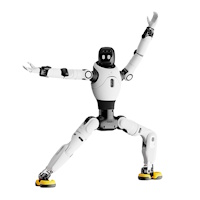
In January 2026, a humanoid robot performed Tai Chi on the floor of the Las Vegas Convention Center, captivated crowds at the world's most-watched consumer technology event, and walked away with multiple Best of CES 2026 awards from Forbes, TechCrunch, MacStories, and Netzwelt. That robot was the AgiBot A2 — and the company behind it, AGIBOT, had just made its official US market debut.
For American businesses, engineers, researchers, and investors who hadn't been tracking the global humanoid robotics race closely, CES 2026 was a wake-up call. At CES 2026, 21 of the 38 companies featured in the humanoid robotics category were based in China — a fact that highlighted a key difference in mindsets between Chinese and American robotics makers, with eastern brands promising faster and more affordable results and their western competitors promising greater functionality and data security.
AgiBot was the standout story among them — and for good reason. While US-based humanoid companies like Figure AI and Agility Robotics were still refining prototypes in controlled environments, AgiBot had already shipped more than 5,100 production humanoid robots in 2025 — approximately 39% of the entire global humanoid market, according to analyst firm Omdia. By March 2026, the company had delivered its 10,000th unit — a production milestone no other humanoid robotics company, American or otherwise, has achieved.
This guide is written specifically for American buyers, investors, enterprise procurement teams, research institutions, and industry operators evaluating AgiBot's products for US-based deployment in 2026. It covers US pricing, certification, availability, ROI analysis, and an honest assessment of both the opportunities and the considerations unique to buying a Chinese robotics platform in today's geopolitical environment.
2. AgiBot's US Market Entry: CES 2026 Debut
On January 5, 2026, AGIBOT officially entered the US market at CES 2026 in Las Vegas, showcasing one of the industry's most comprehensive humanoid robot portfolios, backed by the shipment of 5,000 robots to date. At a time when most of the humanoid robotics industry is still in prototype or pilot phases, AGIBOT's showcase at CES highlighted its accomplished transition from advanced R&D to a full portfolio of mass-produced humanoids already deployed at scale in real-world operations.
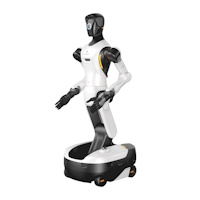
AgiBot occupied Booth 10715 in the LVCC North Hall — a premium exhibition location — and displayed its full four-product lineup: the A2 Series full-size humanoids, the X2 Series compact robots, the G2 Series industrial wheeled humanoids, and the D1 Series quadruped robots. Multiple robots performed coordinated live demonstrations — including synchronized movement, human interaction, and precision manipulation tasks — in real time on the show floor.
Best of CES 2026 Awards
At CES 2026, AGIBOT gained widespread recognition from prominent media outlets and took home several Best of CES 2026 awards. These awards highlight a broader industry shift as robotics moves rapidly toward deployable, production-ready systems. Bloomberg noted AGIBOT was "topping the list of humanoid producers." Netzwelt also distinguished the G2 Series for both its industrial applications and its ability to fold clothes or pour water. TechCrunch noted the company aimed to market the X2 to businesses for entertainment purposes.
The CES 2026 debut served a strategic function beyond press attention: it introduced AgiBot to the American enterprise procurement cycle — putting its products in front of the Fortune 500 operations managers, university research directors, government agency technology officers, and venture capital firms whose purchasing decisions drive US technology adoption at scale.
3. US Safety Certification and Regulatory Status
For any American business considering a significant capital expenditure on a humanoid robot, regulatory certification is a non-negotiable threshold question. AgiBot's A2 is one of very few humanoid robots globally to have cleared this bar cleanly.
In May 2025, the AgiBot A2 humanoid obtained certification from China, the United States, and the European Union simultaneously.
This triple-market certification — covering the three most rigorous regulatory jurisdictions for consumer and industrial products globally — is a meaningful differentiator. Many competing humanoid robots, including several from US-based companies, have not yet obtained equivalent multi-market safety certification. For US enterprise buyers operating in regulated industries (energy, healthcare, logistics, food production), the existence of US market certification is often a prerequisite for procurement approval, insurance coverage, and OSHA compliance review.
The American Security Robotics Act: What US Buyers Need to Know
US lawmakers have proposed prohibiting federal purchase or use of certain Chinese-made robots with the American Security Robotics Act. The senators and representatives sponsoring the legislation expressed concern about cybersecurity vulnerabilities.
This proposed legislation is not yet enacted as of early 2026, and it specifically targets federal government procurement — not private sector purchases. American commercial businesses, universities, research institutions, and private manufacturers face no current legal restriction on purchasing or deploying AgiBot robots. However, organizations in defense-adjacent industries or those processing sensitive government data should evaluate their specific contractual and security obligations before procurement.
AgiBot has acknowledged this regulatory environment and is working with US legal and compliance advisors as part of its North American market development strategy.
4. AgiBot Product Lineup: What's Available for American Buyers
AgiBot entered the US market with a complete product portfolio — four distinct robot families covering a wide range of enterprise use cases:
AGIBOT A2 Series — The Flagship Full-Size Humanoid
The A2 is AgiBot's most commercially proven platform, representing the majority of the 5,100+ units shipped globally in 2025. Standing 169 cm (5'7") tall and featuring 40+ degrees of freedom, the A2 is designed for service, interaction, exhibition, and light manufacturing roles.
Available A2 variants for US buyers:
- A2 Standard: Service and reception-optimized; ~$100,000
- A2-Max: Enhanced payload and durability; ~$130,000–$160,000
- A2-W (Industrial): 2,000 Wh extended battery, 5+ hour runtime; ~$150,000–$190,000
AGIBOT X2 Series — Compact Interactive Humanoid
The X2 is a compact, half-sized humanoid designed for entertainment, education, research, and brand activation. Priced above $20,000, it represents the most accessible entry point into the AgiBot ecosystem for US universities, research labs, and event companies seeking a commercially backed humanoid platform.
AGIBOT G2 Series — Industrial Precision Humanoid
The G2 is AgiBot's industrial-grade wheeled humanoid — purpose-built for precision manufacturing, assembly, and factory-floor automation. With sub-millimeter manipulation accuracy, dual hot-swappable batteries for 24/7 operation, and NVIDIA Jetson Thor compute (2,070 TFLOPS), the G2 is the platform for US manufacturers evaluating humanoid robots for production line integration. Pricing is enterprise quote-based.
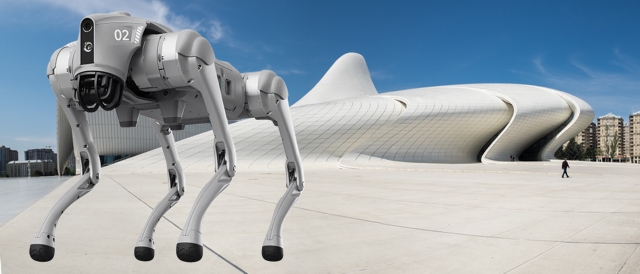
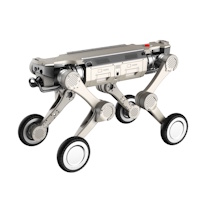
AGIBOT D1 Series — Quadruped Robot
The D1 provides four-legged inspection and logistics capability for environments where bipedal locomotion is unnecessary. The D1 complements humanoid deployments in mixed-fleet facility operations.
OmniHand — Standalone Dexterous Manipulation System
OmniHand is a high-dexterity robotic limb platform for organizations seeking manipulation capability without full humanoid deployment — suitable for integration with existing automation infrastructure.
5. Full US-Relevant Specifications
AgiBot A2 — Complete Specification Table
| Parameter | Specification |
|---|---|
| Height | 169 cm (5'7") / 175 × 60 × 40 cm body |
| Weight | 55 kg (standard) / 69 kg (with configuration) |
| Degrees of Freedom | 40+ total; 12 active + 5 passive DOF per hand |
| Arm Payload | 15 kg per arm (33 lbs) |
| Walking Speed | Up to 3.3 m/s (7.4 mph) |
| Continuous Runtime | ~2 hours standard (A2-W: 5+ hours with 2 kWh pack) |
| AI Compute | 200 TOPS onboard |
| Manipulation Precision | Sub-millimeter (demonstrated: threading a needle) |
| Tactile Sensitivity | 23% above industry norm (MEMS-based multimodal sensing) |
| Face Recognition | 99% wake-up success rate |
| Multimodal AI Accuracy | 96% (text + audio + visual combined, WorkGPT) |
| Sensors | RGBD cameras, fisheye cameras, LiDAR, microphone array |
| Middleware | AimRT (C++20 — outperforms ROS2) |
| Certifications | China + USA + EU (May 2025) |
| US Safety Certification | Yes |
AgiBot G2 — Industrial Specification Table
| Parameter | Specification |
|---|---|
| Active DOF | 26 (7-DOF per arm, force-controlled) |
| Arm Payload | 5 kg per arm |
| Manipulation Accuracy | Sub-millimeter, 0.5N force control |
| Mobility | Omnidirectional wheeled, 1.5 m/s |
| Height | Variable, up to 180 cm |
| Weight | ~185 kg |
| Compute | NVIDIA Jetson Thor — 2,070 TFLOPS FP4 |
| Battery | Dual hot-swappable, ~4 hours each (24/7 capable) |
| IP Rating | IP42 (indoor industrial) |
| Operating Temperature | −15°C to +50°C (5°F to 122°F) |
| Component Standard | 100% automotive-grade; 130+ validation tests |
| Production Line Throughput | Up to 310 units/hour |
| Task Cycle Time | ~19–20 seconds |
| Task Success Rate | >99.9% (Longcheer deployment data) |
| Integration Time | 36 hours from delivery to production-ready |
6. AI Technology: What Powers AgiBot
Understanding what's inside AgiBot's robots matters for US enterprise buyers evaluating AI system capabilities, data governance, and long-term platform evolution.
GO-1: The Generalist Foundation Model
AgiBot's GO-1 (released March 2025) is a generalist embodied foundation model — analogous to GPT-4 for language tasks but applied to physical robot action. Trained on the AgiBot World dataset of over 1 million robot interaction trajectories across 217 tasks, GO-1 enables robots to generalize learned behaviors to new environments and objects without task-specific retraining.
Independent benchmarking shows GO-1 achieves:
- 30% better task performance than policies trained on Google's Open X-Embodiment (the leading open-source embodied AI dataset)
- 32% improvement over the previous state-of-the-art RDT policy on complex manipulation benchmarks
- 60%+ success rates on novel complex tasks in zero-shot generalization testing
WorkGPT: Multimodal Interaction Intelligence
WorkGPT is AgiBot's natural-language and multimodal AI engine — the system that enables AgiBot robots to understand speech without a wake word, recognize faces reliably, and respond intelligently to mixed text, audio, and visual inputs. Its 96% multimodal accuracy and 99% face wake-up rate are the highest published figures for any deployed humanoid robot as of 2026.
Genie Sim 3.0: NVIDIA-Powered Simulation
Built on NVIDIA Isaac Sim, Genie Sim 3.0 enables rapid training of robot behaviors in simulation before real-world deployment. For US enterprise buyers, this means dramatically shorter deployment timelines and lower risk of hardware damage during task training.
AimRT: High-Performance Robot Middleware
AimRT is a lightweight, high-performance runtime framework developed by AGIBOT specifically for modern humanoid robotics, designed to address limitations in existing middleware like ROS2. Built using C++20, AimRT offers modern resource management, asynchronous programming, and observability features that surpass ROS2. It supports multiple communication protocols including ROS2, HTTP, gRPC, MQTT, and Zenoh, providing flexibility for edge, cloud, and AI-integrated robotics deployments.
For US robotics engineers and systems integrators, AimRT's ROS2 compatibility ensures that existing automation code and workflows can integrate with AgiBot hardware without wholesale platform replacement.
NVIDIA Isaac GR00T Partnership
AGIBOT was named an NVIDIA Isaac GR00T ecosystem partner at GTC 2026 (announced March 16–17, 2026). Alongside 1X, Agility, Boston Dynamics, Figure, Hexagon Robotics, and NEURA Robotics, AGIBOT is adopting GR00T N models to accelerate industrial deployments. The G2 wheeled humanoid runs on the NVIDIA Jetson Thor computing platform.
This partnership places AgiBot in the same NVIDIA ecosystem as the leading US-based humanoid companies — meaning shared toolchains, compatible simulation environments, and access to the same state-of-the-art foundation model infrastructure underpinning the global AI robotics industry.
7. Real-World Performance Data
Unlike many humanoid robots that are evaluated only in controlled laboratory conditions, AgiBot has published verified performance data from live commercial deployments — a level of operational transparency important to US enterprise procurement teams requiring proof-of-concept before capital commitment.
Longcheer Technology Tablet Manufacturing Deployment
AGIBOT deployed G2 humanoid robots into a live consumer electronics manufacturing line at Longcheer Technology's tablet production facility. The robots operate at Multimedia Integrated Testing (MMIT) stations — handling precision tasks such as picking up devices, placing them into testing fixtures, and sorting finished or defective units. Reported performance includes: throughput of up to 310 units per hour, cycle times of around 19–20 seconds per task, a task success rate exceeding 99.9%, and production line integration completed within 36 hours.
Guinness World Record Endurance Validation
In November 2025, the AgiBot A2 walked 106.286 kilometers (66 miles) from Suzhou to Shanghai over three consecutive days — setting a Guinness World Record for the longest distance walked by a humanoid robot. This achievement is operationally significant beyond the headline figure: it validated the A2's mechanical reliability, battery management system, locomotion algorithm stability, and dynamic balance control under real-world extended-duration conditions — the same conditions US buyers would expect in continuous commercial deployment.
Warehouse and Logistics Performance
Companies implementing AgiBot solutions have reported 35% efficiency increases and complete ROI within 9 months. In logistics applications, AgiBot users report 60% reductions in operational expenses and 99.9% accuracy rates in automated operations.
8. US Industry Applications and Use Cases
AgiBot's products are engineered for deployment across eight commercially validated application categories, all of which have direct US market equivalents:
Advanced Manufacturing and Assembly
The G2 Series directly addresses the US manufacturing sector's acute labor shortage challenge. The company plans to scale deployments to 100 robots by Q3 2026 and expand into sectors such as automotive, semiconductors, and energy. For American factories facing skilled labor shortages and rising wages, the G2 provides a flexible, AI-driven alternative to rigid fixed automation — capable of performing precision assembly tasks (electronics, automotive components, industrial hardware) with sub-millimeter accuracy, without requiring the full factory redesign that traditional fixed robotics demands.
Logistics and Warehouse Operations
American e-commerce, retail, and third-party logistics (3PL) operators managing the dual pressure of rising labor costs and tightening delivery SLAs represent a primary US deployment opportunity. AgiBot humanoids perform logistics sorting, parcel handling, inventory inspection, and material transport — tasks that align directly with the operational challenges faced by US fulfillment centers and distribution hubs.
Corporate Reception and Hospitality
US hotel chains, corporate campuses, healthcare facility lobbies, and entertainment venues represent strong commercial markets for the A2 Standard. The robot's WorkGPT-powered multilingual interaction capability, 99% face recognition, and no-wake-word conversational engagement enable autonomous reception, visitor guidance, and FAQs without human operator involvement.
Higher Education and Research Institutions
The X2 Series and A2 Standard are well-suited for US university robotics laboratories, AI research centers, and STEM education programs. AgiBot's open-source X1 platform — with publicly released design files and software — has particular appeal for US academic researchers developing novel locomotion, manipulation, and embodied AI algorithms. The NVIDIA Isaac GR00T integration further aligns AgiBot with the AI research frameworks already in use at leading US universities including MIT, Stanford, Carnegie Mellon, and UC Berkeley.
Retail Brand Activation and Event Marketing
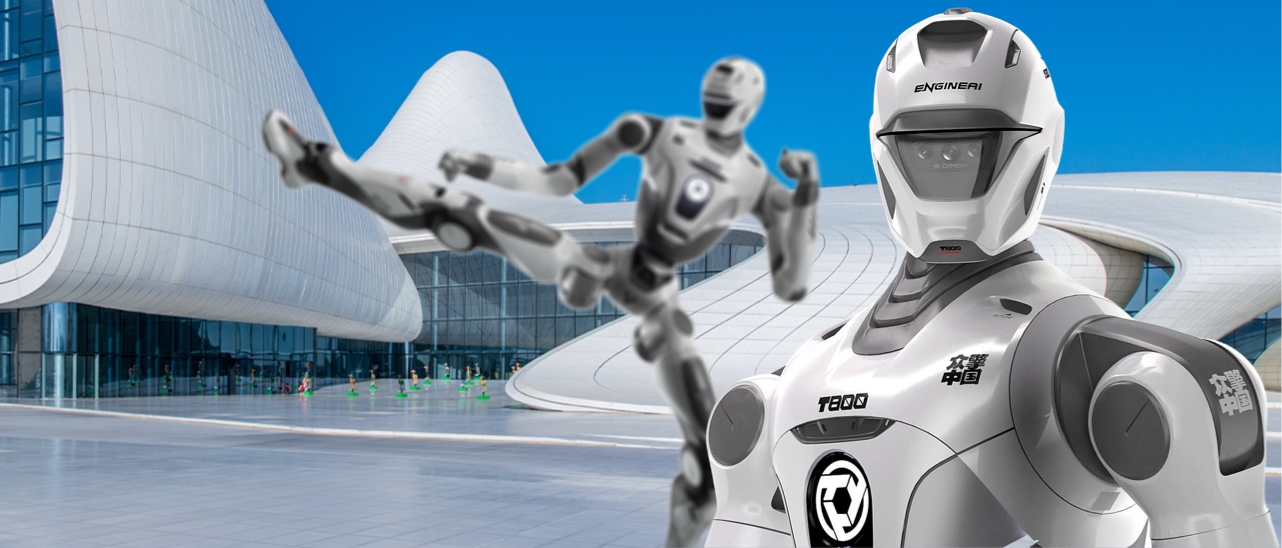
US marketing agencies, brand experience companies, and major consumer brands seeking to distinguish their experiential marketing have a proven AgiBot precedent to draw from: Pepsi's "Fizzbot" — a customized A2 brand ambassador that debuted alongside David Beckham and served beverages at the 2025 World AI Conference — demonstrates the platform's suitability for high-profile American brand activations. The A3's demonstrated ability to perform dynamic martial arts movements (aerial kicks, mid-air maneuvers) expands event entertainment possibilities significantly beyond traditional promotional robots.
Security and Facility Patrol
With LiDAR, RGBD cameras, and autonomous navigation capabilities, AgiBot humanoids can conduct security patrol rounds, anomaly detection, and access monitoring in commercial properties, data centers, and industrial facilities — operating continuously across shifts without human supervisor intervention.
Data Collection and AI Training Infrastructure
The AgiBot A2's comprehensive sensor suite — including stereoscopic cameras, LiDAR, microphone arrays, and force-feedback systems — makes it a capable mobile data collection platform for US AI companies building training datasets for embodied AI systems, spatial computing applications, and physical environment modeling.
9. AgiBot vs American Competitors: Honest Comparison
American buyers evaluating AgiBot will inevitably compare it against domestically-built alternatives. Here is a factual, category-by-category assessment:
| Comparison Point | AgiBot A2/G2 | Tesla Optimus | Agility Digit | Figure 02 | Boston Dynamics Spot |
|---|---|---|---|---|---|
| Current US Availability | ✅ Yes (enterprise) | ❌ Not for sale | ⚠️ Limited enterprise | ❌ Not for sale | ✅ Yes ($74,500+) |
| 2025 Units Shipped | 5,168 | <500 (internal) | <200 | <200 | ~1,500+ (cumulative) |
| US Safety Certification | ✅ Yes (May 2025) | Pending | ✅ Yes | Pending | ✅ Yes |
| Base US Price | ~$100,000 | N/A (no public sale) | ~$250,000 | N/A | $74,500 |
| Arm Payload | 15 kg | ~20 kg | ~16 kg | ~20 kg | 14 kg (Spot Arm) |
| Degrees of Freedom | 40+ | ~28 | ~28 | ~16 | 12 (quadruped) |
| AI Foundation Model | GO-1 (open benchmark) | Tesla FSD-derived | AWS Bedrock | Figure n1 | Spot SDK |
| NVIDIA GR00T Partner | ✅ Yes | ❌ No | ✅ Yes | ✅ Yes | ✅ Yes |
| Robot-as-a-Service | ✅ Yes | ❌ No | ❌ No | ❌ No | ⚠️ Rental (limited) |
| CES 2026 Award | ✅ Multiple | ❌ No | ❌ No | ❌ No | ❌ No |
| Guinness World Record | ✅ Yes (106 km walked) | ❌ No | ❌ No | ❌ No | ❌ No |
AgiBot vs Tesla Optimus: The Most-Asked US Comparison
Tesla Optimus is the most frequently cited US competitor to AgiBot — driven by brand recognition and Tesla CEO Elon Musk's public statements about building humanoid robots for under $20,000–$30,000 at scale. The honest assessment for US buyers in 2026:
As of March 2026, AGIBOT is ahead in commercial deployment — 5,168 units shipped and operational across eight industries, while Tesla Optimus remains in internal deployment with no public sale date or confirmed pricing. Tesla has promised a target price of $20K–$30K, which would massively undercut AGIBOT if achieved. Tesla's advantage is its FSD-derived AI expertise and consumer brand recognition. AGIBOT's advantage is that it has been shipping production robots since late 2024. The real competition will begin when Tesla enters commercial sales.
For US buyers who need a deployable humanoid robot now — not in 2027 or 2028 — AgiBot is one of the few options with a documented production track record and verifiable enterprise deployment references.
AgiBot vs Agility Robotics Digit: The Price Question
Agility Robotics (backed by Amazon, based in Salem, Oregon) offers the Digit humanoid robot at approximately $250,000 per unit — more than 2.5× AgiBot's A2 entry price. While Digit carries US-domestic-company advantages for procurement teams concerned about data sovereignty, AgiBot's cost-per-unit advantage is material for organizations seeking to deploy at scale rather than in single-unit pilots.
AgiBot vs Boston Dynamics Spot: Different Tool for Different Jobs
Boston Dynamics Spot ($74,500 base) is a quadruped robot — fundamentally different in form factor and application from AgiBot's bipedal humanoids. Spot excels at industrial inspection in hazardous environments; AgiBot's humanoids excel at manipulation, interaction, and general-purpose service tasks in human-built environments. They are complementary rather than directly competing for most enterprise use cases.
10. Pricing for US Buyers: What Does AgiBot Actually Cost?
The AgiBot A2 costs between $100,000 and $190,000 USD depending on the variant and configuration. The Standard model starts around $100,000, the A2-Max ranges $130,000–$160,000, while the industrial A2-W variant with its 2 kWh battery can reach $150,000–$190,000. Contact AgiBot directly for exact quotes as pricing varies by region and volume.
Complete US Pricing Reference
| Model | Starting US Price | Notes |
|---|---|---|
| AgiBot A2 Standard | ~$100,000 | Service + reception optimized |
| AgiBot A2-Max | ~$130,000–$160,000 | Enhanced payload and durability |
| AgiBot A2-W Industrial | ~$150,000–$190,000 | 2 kWh battery, 5+ hr runtime |
| AgiBot X2 | $20,000+ | Compact, education/entertainment |
| AgiBot G2 | Enterprise quote | Industrial precision; contact sales |
| AgiBot A3 | TBD (enterprise) | No public pricing yet |
| Robot-as-a-Service (RaaS) | From ~€899/day | Available in North America |
Total Cost of Ownership Considerations for US Buyers
Beyond the base hardware price, US buyers should factor in:
- Integration and setup: AgiBot's G2 demonstrated 36-hour production integration at Longcheer — significantly faster than traditional industrial robotics installation timelines
- Training and onboarding: AgiBot's "Powered by AGIBOT" partner program provides technical support for US system integrators
- Software and firmware: OTA updates are included; no separate software licensing required for core operation
- RaaS as a cost alternative: AgiBot's Robot-as-a-Service model, available in North America, enables deployment without full upfront capital expenditure — critical for smaller US enterprises or proof-of-concept pilots before full fleet commitment
11. How to Buy AgiBot in the United States
US availability is currently limited to enterprise inquiries and B2B partnerships. The company's online store (store.agibot.com) launched global operations in March 2026, and the RaaS rental program covers North America.
Step-by-Step US Purchase Guide
Step 1 — Global Online Store: Visit store.agibot.com — AgiBot's global e-commerce platform, which launched in March 2026 and accepts North American orders for the A2 Series, X Series, and D1 Series.
Step 2 — Official Website Inquiry: For enterprise, volume, or custom-configuration purchases, submit an inquiry through www.agibot.com. AgiBot's sales team handles North American enterprise accounts directly.
Step 3 — Authorized US Resellers: Several US-based robotics resellers and distributors are now carrying or can order AgiBot products, including:
- Top3DShop (US-based, quote-based purchasing for the A2)
- Regional authorized distributors (contact AgiBot for current US distributor list)
Step 4 — Robot-as-a-Service: For organizations not ready for outright purchase, AgiBot's RaaS rental model provides access to humanoid robots on a daily or project basis — available in North America via the AgiBot online platform.
Step 5 — "Powered by AGIBOT" Partnership: For US technology companies and system integrators who want to build products or services on AgiBot's humanoid platform, the Powered by AGIBOT partner program provides customization access to hardware, software, and AI models — lowering the barrier to building AgiBot-based solutions for specific US market verticals.
12. ROI Analysis for American Businesses
For US enterprise buyers, return on investment (ROI) is the decisive evaluation metric. Here is a factual ROI framework based on published AgiBot deployment data:
Manufacturing ROI Model
A G2 unit deployed at $150,000 (estimated) performing precision assembly on a consumer electronics production line:
| Metric | Value |
|---|---|
| Purchase price | ~$150,000 |
| Throughput | 310 units/hour |
| Cycle time | 19–20 seconds/task |
| Task success rate | >99.9% |
| Runtime | 24/7 (dual hot-swap battery) |
| Integration time | 36 hours |
| US median assembly worker annual cost | ~$45,000–$65,000 |
| Break-even (vs. 2 workers displaced) | ~18–24 months |
Logistics and Service ROI Model
Companies implementing AgiBot solutions have reported 35% efficiency increases and complete ROI within 9 months. Users report 60% reductions in operational expenses and 99.9% accuracy rates in automated operations.
| Metric | Value |
|---|---|
| A2 Standard purchase price | ~$100,000 |
| Reported operational cost reduction | 60% vs. staffed equivalent |
| Reported efficiency improvement | 35% |
| Reported ROI payback period | 9 months |
| Annual US retail/logistics worker cost | ~$35,000–$55,000 |
RaaS Model ROI (No Capital Expenditure)
For US businesses not ready to commit capital, AgiBot's Robot-as-a-Service model shifts the calculation entirely:
- No upfront purchase cost
- Pay-per-use or daily/weekly rental rates
- Ideal for seasonal demand spikes, trade show demonstrations, event marketing, and proof-of-concept pilots before fleet investment
13. US Buyer Considerations: Data, Security, and Geopolitics
American enterprise buyers evaluating a Chinese-developed robotics platform must engage seriously with a set of considerations that do not apply equally to domestic alternatives. Transparent acknowledgment of these factors is essential for responsible procurement decision-making.
Data Handling and Cybersecurity
AgiBot robots collect significant volumes of environmental, visual, audio, and interaction data during operation. US buyers in sensitive industries — defense, healthcare, financial services, critical infrastructure — should:
- Review AgiBot's data governance policies and terms of service in detail
- Evaluate whether operational data is stored locally, on Chinese cloud infrastructure, or on buyer-controlled systems
- Consult with cybersecurity counsel regarding data residency and sovereignty requirements for their specific regulatory environment
The American Security Robotics Act
US lawmakers have proposed prohibiting federal purchase or use of certain Chinese-made robots with the American Security Robotics Act. As of May 2026, this legislation has not been enacted. It targets federal agency procurement, not private commercial purchases. US private sector organizations have no current legal barrier to AgiBot acquisition, but organizations with federal contracts should monitor this legislation's progress.
Geopolitical Supply Chain Risk
US-China technology trade tensions — including potential restrictions on NVIDIA chip exports to Chinese companies — represent a long-term supply chain risk for AgiBot's AI compute roadmap. Buyers committing to multi-year AgiBot deployments should assess platform continuity risk and evaluate contractual protections around software support, OTA updates, and hardware availability.
AgiBot's Response to US Market Concerns
AgiBot has acknowledged the US geopolitical environment and has taken steps to address enterprise buyer concerns, including:
- Achieving US safety certification (May 2025) — one of the first Chinese humanoid companies to do so
- Partnering with NVIDIA (a US company) for its core AI compute platform
- Expanding its "Powered by AGIBOT" partner program to enable US system integrators to build locally supported solutions on AgiBot hardware
- Positioning store.agibot.com as a global commerce hub with North American commercial infrastructure
14. Advantages for US Organizations
Production-Proven at Scale — Unlike Any American Competitor
No American humanoid robotics company has shipped 10,000 units. No American humanoid robot has a Guinness World Record for endurance. No American humanoid robot has been deployed simultaneously in electronics manufacturing, automotive assembly, logistics, security, and corporate hospitality at production scale. AgiBot's deployment record is not theoretical — it is documented, independently verified, and commercially referenceable.
US-Certified and Ready to Deploy Today
The A2's US safety certification (May 2025) means American buyers can deploy immediately without waiting for regulatory clearance — a barrier that continues to delay deployment of several US-domestic competing platforms.
NVIDIA Ecosystem Compatibility
AgiBot's NVIDIA Isaac GR00T partnership and NVIDIA Jetson Thor compute (G2) mean that US organizations with existing NVIDIA-based AI infrastructure — including simulation environments, trained models, and robotics software toolchains — can integrate AgiBot hardware without platform switching.
Flexible Acquisition: Own or Rent
AGIBOT's Robot-as-a-Service (RaaS) platform lowers the barrier to entry by shifting from ownership to a rental-based approach, enabling humanoid robots to be deployed across diverse scenarios from private celebrations to high-impact industrial use. This flexibility makes AgiBot accessible to a broader range of US organizations — from Fortune 500 manufacturers to mid-size event companies — than platforms available only through outright purchase at six-figure price points.
Broadest Portfolio from a Single Vendor
With five product families (A, X, G, D Series, plus OmniHand) sharing a unified AI platform, US organizations can deploy multiple robot types across different operational contexts — manufacturing floor, lobby, warehouse, outdoor patrol — from a single vendor relationship, with a single AI stack, a single support contract, and a single integration team.
15. Frequently Asked Questions for US Buyers
Is AgiBot available to buy in the United States?
Yes. AgiBot officially entered the US market at CES 2026 in January 2026 and launched global e-commerce operations at store.agibot.com in March 2026. Enterprise buyers can purchase or lease AgiBot humanoid robots directly through the official global store, through authorized US resellers including Top3DShop, or through direct enterprise sales inquiry at www.agibot.com. The A2 Series, X2 Series, and D1 Series are all available for US purchase. The G2 industrial series is available through enterprise quote. A Robot-as-a-Service (RaaS) rental model is also available across North America for organizations preferring flexible access over outright ownership.
How much does AgiBot cost in the USA?
The AgiBot A2 Standard starts at approximately $100,000 USD. The A2-Max ranges from $130,000 to $160,000, and the industrial A2-W variant (with its 2,000 Wh extended battery providing 5+ hours of runtime) reaches $150,000 to $190,000 depending on configuration. The compact X2 Series starts above $20,000. The industrial G2 is priced on an enterprise quote basis — contact AgiBot's sales team directly. The RaaS rental model offers a no-capital-expenditure alternative starting at approximately €899 per day, available in North America.
How does AgiBot compare to Tesla Optimus for American buyers?
The most significant difference is availability. AgiBot has shipped more than 10,000 humanoid robots in commercial deployments as of March 2026, while Tesla Optimus remains in internal testing with no confirmed public sale date or pricing. AgiBot's A2 carries US safety certification and is available for enterprise purchase today. Tesla's long-term price target of $20,000–$30,000 per unit would be highly disruptive if achieved at scale, but no timeline has been confirmed. For businesses that need a deployable, production-proven humanoid robot in 2026 rather than 2028 or later, AgiBot is one of the only options available.
Does AgiBot have US safety certification?
Yes. The AgiBot A2 achieved simultaneous China, US, and EU safety certification in May 2025 — one of the first humanoid robots to clear all three regulatory markets simultaneously. This certification is required for deployment in regulated commercial and industrial environments in the United States. US buyers should confirm specific compliance requirements with their industry's regulatory bodies (OSHA, FDA, etc.) for their particular deployment context.
What is the ROI for deploying AgiBot in a US business?
ROI varies significantly by application. In logistics and warehouse automation, early adopters have reported 35% efficiency gains and complete investment payback within 9 months, alongside 60% reductions in operational expenses compared to equivalent staffed operations. In precision manufacturing (G2 deployment), the combination of 24/7 operation capability, 99.9%+ task success rates, and 36-hour integration timelines supports break-even periods of 18–24 months for most US manufacturing contexts when replacing equivalent human labor costs. The RaaS rental model eliminates upfront capital risk entirely for organizations seeking proof-of-concept before committing to full fleet deployment.
Should US companies be concerned about buying a Chinese robot?
This is a legitimate question that deserves a straightforward answer. There are genuine considerations — particularly around data governance, supply chain risk under US-China technology tensions, and potential future regulatory constraints on federal agency procurement (via the proposed American Security Robotics Act, not yet enacted). However, there are also genuine mitigations: AgiBot holds US safety certification, partners with US-based NVIDIA for core AI compute, and has a global commercial presence across Europe and Asia-Pacific. For private-sector US buyers in non-defense, non-federal-contract contexts, AgiBot is commercially available and deployable today. Organizations with specific data sovereignty requirements or defense-related contracts should conduct detailed due diligence before procurement.
16. Summary
AgiBot entered the United States market with credentials no American humanoid robotics company can currently match: more than 10,000 units shipped, 39% global market share, US safety certification, multiple Best of CES 2026 awards, a Guinness World Record, an NVIDIA GR00T ecosystem partnership, and a proven production track record across electronics manufacturing, automotive assembly, logistics, hospitality, and academic research. For American enterprise buyers, operations managers, research institutions, and technology investors evaluating the humanoid robotics landscape in 2026, AgiBot represents the most commercially mature, production-proven, and broadly deployable humanoid robot platform currently accessible in the US market. The questions US buyers must honestly evaluate are not whether AgiBot's technology works — the evidence for that is documented and independently verified — but whether its US certification, data governance posture, support infrastructure, and geopolitical risk profile align with their specific operational and procurement requirements. For the majority of American commercial enterprises operating outside of federal or defense contexts, AgiBot offers a compelling, available, and ROI-substantiated path to humanoid robot deployment today.
17. References and External Links
- AgiBot Official Website — agibot.com
- AgiBot Global Store — store.agibot.com
- PRNewswire — AgiBot Makes US Market Debut at CES 2026 (January 5, 2026)
- PRNewswire — AgiBot Best of CES 2026 Awards (January 16, 2026)
- The Robot Report — AgiBot Makes US Debut with 5,100 Robots Shipped
- The Robot Report — AgiBot Rolls Out 10,000th Humanoid Robot (March 2026)
- Interesting Engineering — AgiBot G2 Humanoid Robots on Live Production Line
- BGR — China's Humanoid Robots Are Coming for the US Market (January 2026)
- BotInfo — AgiBot Humanoid Robots: Price, Specs and Where to Buy (2026)
- Robozaps — AgiBot A2 Review: Full Specs and Pricing (March 2026)
- Top3DShop — AgiBot A2 Humanoid Robot (US Reseller)
- Capital.com — AgiBot IPO: Everything to Know
- AgiBot Wikipedia Page
- Gizmochina — AgiBot Took 39% of Global Humanoid Market in 2025
- NVIDIA GTC 2026 — AgiBot Named Isaac GR00T Ecosystem Partner
US SEO Quick Reference Card
| Tag | Value |
|---|---|
| Meta Title | AgiBot Humanoid Robot | US Buyer's Guide & Review 2026 |
| Meta Description | AgiBot — world's #1 humanoid robot maker — is now available in the USA. Get full pricing from $100K, specs, ROI data, US certification status, and honest comparison vs Tesla Optimus and Boston Dynamics. |
| Primary Keyword | AgiBot USA |
| Top US Search Intent Keywords | buy AgiBot in America, AgiBot A2 price USA, AgiBot vs Tesla Optimus, humanoid robot for sale USA 2026, AgiBot CES 2026 best of show |
| Long-Tail US Keywords | best humanoid robot to buy in the United States 2026, AgiBot G2 industrial robot for US manufacturers, AgiBot ROI analysis American business, is AgiBot available in USA, AgiBot vs Agility Digit comparison |
| Canonical URL | /agibot-humanoid-robot-usa-buyers-guide |
| Schema Types | Product + FAQPage + Article + Organization + Review |
| US Geo-Target | United States — All States |
| Recommended Internal Links | Boston Dynamics Spot review, humanoid robot comparison USA 2026, UBTECH Walker S2 US guide |
This article was researched and written for US audiences as of May 2026. All pricing is in USD unless otherwise noted. Specifications and regulatory status are subject to change — always verify current details directly with AgiBot or an authorized US distributor before making any purchasing decision. This article does not constitute legal, financial, or procurement advice.
What is AgiBot?
AgiBot (AGIBOT Innovation Shanghai Technology Co., Ltd., also known as Zhiyuan Robotics) is a Shanghai-based humanoid robotics company founded in February 2023 by Deng Taihua and Peng Zhihui. It is the world's highest-volume humanoid robot manufacturer by units shipped, having delivered more than 5,100 robots in 2025 according to analyst firm Omdia, capturing approximately 39 percent of the global humanoid market. AgiBot develops a portfolio of general-purpose embodied AI robots, the proprietary GO-1 foundation model, and the AgiBot World open-source training dataset.
How does AgiBot's GO-1 foundation model work?
GO-1 (Genie Operator-1) uses a Vision-Language-Latent-Action (ViLLA) architecture that combines a Vision-Language Model with a Mixture of Experts framework. The VLM draws on internet-scale data for scene and object understanding, while the Mixture of Experts includes a Latent Planner trained on cross-embodiment data and a human operation data module, alongside an Action Expert trained on over one million real robot demonstrations from the AgiBot World dataset. This architecture enables robots to learn from human videos, generalize to tasks they have never been explicitly trained on, and adapt across different robot bodies. GO-1-trained policies achieve over 60 percent success rates on complex tasks and outperform previous leading approaches by 32 percent.
Why is AgiBot important for the humanoid robotics industry?
AgiBot is significant because it has demonstrated that humanoid robots can be manufactured at commercial scale and deployed in real-world environments across multiple industries, a transition that most of the industry was still working toward as of early 2026. Its 10,000-unit production milestone, its Guinness World Record-holding A2, its open AgiBot World dataset, and its CES 2026 Best of CES recognitions collectively establish it as the company that has done the most to shift humanoid robotics from prototype demonstrations to genuine commercial products. Its GO-1 foundation model and open data strategy also contribute to the broader research community working on embodied AI.
What are the benefits of AgiBot robots for US businesses?
For US-based enterprises, AgiBot robots offer several practical advantages. The A2 Series is US-certified, production-validated with over 5,000 units shipped, and offers enterprise-grade service AI with documented 96 percent multimodal accuracy. The G2 provides industrial manipulation capability with sub-millimeter precision, demonstrated in actual factory deployments. The open AgiBot World dataset and GO-1 foundation model give technical teams access to one of the most comprehensive embodied AI training resources available. The company's Robot-as-a-Service rental model provides flexible access for organizations with project-specific needs. And AgiBot's "Powered by AGIBOT" partner program enables US systems integrators to build customized solutions on top of AgiBot's hardware and software foundation.
What happened at AgiBot's US debut at CES 2026?
AgiBot officially entered the US market at CES 2026 in Las Vegas on January 5, 2026, presenting its full product portfolio including the A2 Series, X2 Series, G2 Series, and D1 Series at the North Hall of the Las Vegas Convention Center. The company confirmed it had already shipped more than 5,000 robots globally and was ranked the number-one humanoid robot manufacturer in the world by volume according to Omdia. At CES, AgiBot also introduced Genie Sim 3.0, its open simulation platform. The company received multiple Best of CES 2026 awards from Forbes, Bloomberg, Ubergizmo, MacStories, and Netzwelt across different product categories. AgiBot's CES appearance marked the beginning of its formal commercial expansion into the North American market.
How does AgiBot compare to Unitree Robotics?
AgiBot and Unitree are the two leading Chinese humanoid robot manufacturers and together are projected to account for nearly 80 percent of global humanoid shipments in 2026. AgiBot leads in total shipments (approximately 39 percent market share in 2025) and product portfolio breadth, with six distinct hardware families compared to Unitree's more focused lineup. Unitree's advantage is in consumer and research market accessibility: its G1 and H2 robots are available through established online distribution at significantly lower prices ($21,600 and $40,900 respectively) than AgiBot's enterprise-targeted A2 Series ($100,000 to $190,000). For large-scale enterprise deployments in manufacturing, hospitality, or retail, AgiBot's production scale and service AI capabilities are competitive differentiators. For US research labs and developers seeking the most accessible entry point, Unitree's distribution network currently has broader US availability.