PUDU Robotics D9 Humanoid Robot

In stock
- BRAND:
- PUDU ROBOTICS
- PART #:
- D9
- ORIGIN:
- China
- AVAILABILITY:
- SUBJECT TO AVAILABILITY
- SKU:
- Pudu-Robotics-D9
PUDU Robotics D9 Humanoid Robot
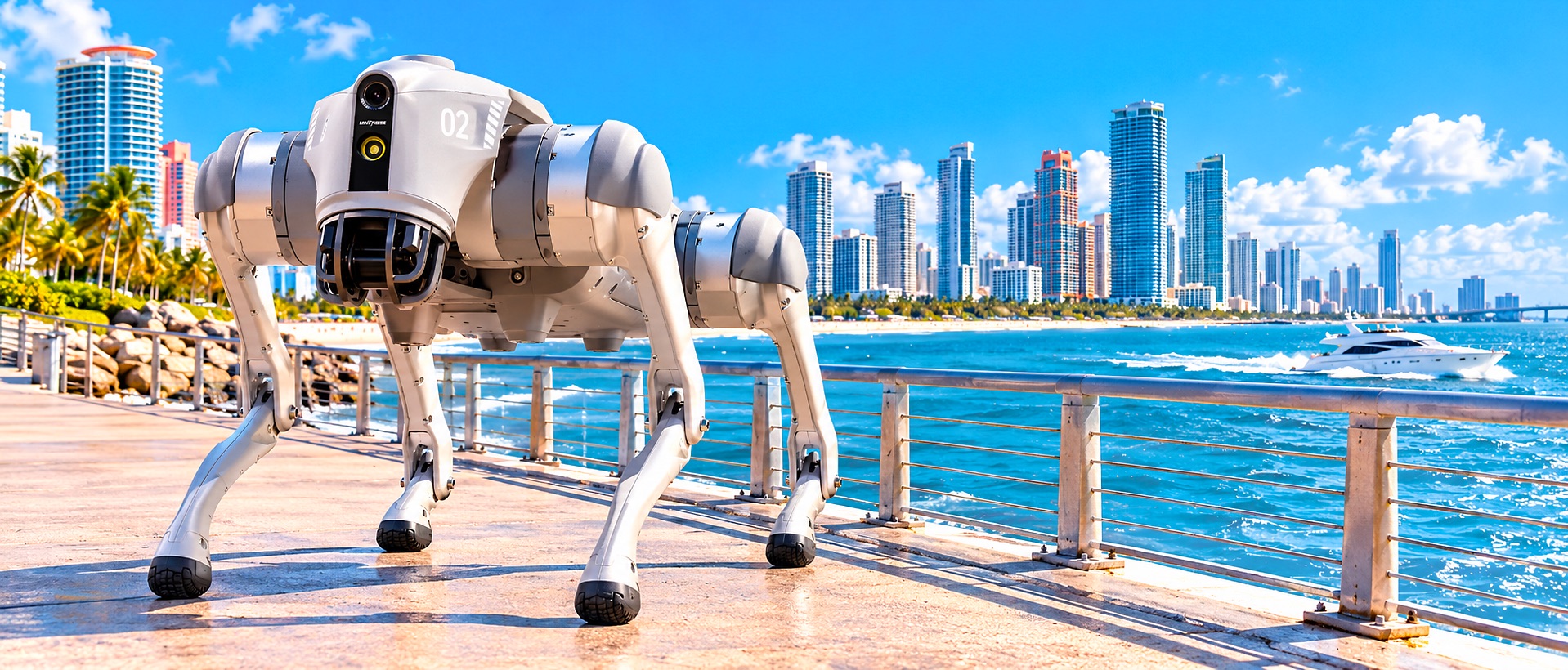
A humanoid robot is usually judged by the walk. Launch videos linger on the first steps, the slope, the recovery from a nudge. The harder test comes after the robot arrives: can it close a hand around a mop handle, feel a cup beginning to slip, and do useful work with the surface it just walked to? The PUDU Robotics D9 Humanoid Robot is built around that second question as much as the first. Its 42 degrees of freedom carry it across the room; the PUDU DH11 dexterous hand at the end of each arm, with 12 tactile sensing regions, is what it is there to use.
Robots USA sells the PUDU Robotics D9 Humanoid Robot to universities, research institutes, system integrators, facility operators and corporate innovation groups across the United States, and acts as the single point of contact from the first quotation through delivery and ongoing technical support. Every inquiry placed on this page is quoted, shipped and supported by Robots USA.
Background
Pudu Technology and the X-Lab program
Pudu Technology Inc. is described in launch coverage as being based in Shenzhen, China, and the company is best known for commercial service robots that deliver food in restaurants, run packages through hotels and offices, and clean commercial floors. Those products taught the company how robots behave in crowded, unpredictable human spaces. The D9 comes from a different part of the organization: according to the published announcement, it was developed by Pudu X-Lab, the company's advanced research team, and it followed the semi-humanoid PUDU D7 and the PUDU DH11 dexterous hand as the third release from that team in the same year. The same report calls the D9 the company's first full-sized bipedal humanoid.
Positioning and key technology
Read as a sequence, the X-Lab releases show the strategy. The D7 put a humanoid upper body on a wheeled base, the DH11 solved the hand, and the D9 combines a full bipedal lower body with those hands on a single platform. The published specification gives it 6 degrees of freedom per leg, 7 per arm and 42 in total, a maximum joint torque of 352 N·m, and 275 TOPS of on-board computing. Perception combines RGB and RGBD cameras, tactile sensors and an IMU. Pudu reports a visual semantic navigation system with real-time 3D mapping, so the robot is said to build a live model of its surroundings rather than follow a fixed route. The intent is a machine that walks like an adult, perceives like a service robot, and manipulates like a hand.
Technical Specifications
| Specification | Value |
|---|---|
| Total degrees of freedom | 42 |
| Single-leg DOF | 6 |
| Single-arm DOF | 7 |
| Maximum joint torque | 352 N·m |
| Leg length | Thigh 325 mm (12.80 inches); calf 383 mm (15.08 inches) |
| Arm length | Arm 580 mm (22.83 inches); hand 220 mm (8.66 inches) |
| Maximum payload (testing environment) | 20 kg (44.09 pounds); single-arm 10 kg (22.05 pounds) |
| Dexterous hand (PUDU DH11) | 12 tactile sensing regions; active DOF 6; passive DOF 5 |
| Sensors | RGB, RGBD, tactile sensors, IMU |
| Computing power | 275 TOPS |
| Battery | 15 Ah (0.72 kWh) |
| Maximum walking speed (reported) | Up to 2 m/s (4.4 mph) on flat surfaces |
| Navigation (reported) | Visual semantic navigation with real-time 3D mapping |
Specifications as published by the manufacturer; every figure is confirmed against the current datasheet at quotation. Battery runtime, charging time, IP rating, connectivity, operating system, box contents and the software development kit have not been published and are confirmed at quotation.
What makes the D9 different from the PUDU D7?
The shortest answer is legs. The PUDU D7 Wheeled Humanoid Robot is described in launch coverage as a semi-humanoid: a humanoid torso and arms on a wheeled base. That design is efficient on flat, open floors, and for many delivery and reception tasks it is the right call. The D9 replaces the base with two legs of 6 degrees of freedom each, which is why its published total of 42 DOF is a full-body figure. Legs change what counts as reachable. A curb, a staircase, a loading-dock ramp or a doorway with a raised threshold stops a wheeled platform and merely slows a walking one. Pudu's demonstration showed the D9 walking upright, navigating obstacles and climbing slopes, and reported a walking speed of up to 2 m/s (4.4 mph) on flat surfaces, which the company compares to adult walking pace. The trade-off is complexity: a bipedal platform needs more torque at the joints, hence the published 352 N·m maximum, and more on-board computing to keep its balance while it works, hence 275 TOPS. For a buyer, the question is simply whether the environment contains steps and thresholds. If it does, the D9 is the platform in this lineup built for them; if it does not, the D7 deserves a look first.
What does the PUDU DH11 dexterous hand add?
A humanoid without useful hands is a very expensive way to move a camera around a building. The D9 ships with the PUDU DH11 dexterous hand, which was released as its own product before the D9 and has a published configuration of 6 active and 5 passive degrees of freedom with 12 tactile sensing regions. Tactile feedback is the detail that matters. Vision tells a robot where an object is; touch tells it whether the grip is holding, whether the object is rigid or soft, and when to stop squeezing. In Pudu's demonstration video the D9 performed ground cleaning tasks using the PUDU SH1, which is a reported example rather than a specification, but it illustrates the point: the task was not walking, it was holding a tool and working a surface. The published payload gives the envelope for that work, 20 kg (44.09 pounds) in a testing environment and 10 kg (22.05 pounds) for a single arm, with an arm length of 580 mm (22.83 inches) plus a 220 mm (8.66 inches) hand defining the reach. Those figures come from a test setting and should be treated as the ceiling, not the everyday operating load.
Who is the PUDU Robotics D9 for?
The first buyer is the research group. University robotics labs and corporate AI teams working on locomotion, manipulation or embodied learning need a full-body platform with real tactile hands, and the D9 offers 42 DOF, 275 TOPS of compute and a published sensor suite in a single integrated machine. For these buyers, the X-Lab range is worth browsing as a whole, because the D7, the DH11 and the D9 are designed to share a lineage.
The second is the system integrator building a proof of concept for a facility client: a cleaning contractor, a hospitality group or a logistics operator who wants to see what a humanoid can do on a real site before committing to a program. The third is the operations team that already runs Pudu delivery or cleaning robots and wants to extend automation into the parts of the building those robots cannot reach, such as stairwells and service corridors.
Two steers. If the use case is confined to flat floors and the goal is manipulation rather than locomotion, the wheeled PUDU D7 is the simpler platform to deploy and maintain. If the comparison is against other walking humanoids rather than against Pudu's own range, the Bipedal Humanoids category gathers the alternatives Robots USA supplies. Buyers should also note that the unpublished items above, battery runtime, charging time, IP rating, connectivity, operating system and SDK, are exactly the ones a deployment plan depends on, so they are confirmed with Robots USA at quotation.
What is the PUDU Robotics D9 used for?
- Embodied AI research — a full-body bipedal platform with tactile hands for training and testing locomotion and manipulation policies.
- Floor-care proof of concept — demonstrated by Pudu performing ground cleaning tasks with the PUDU SH1, a starting point for cleaning-service pilots.
- Multi-level facility logistics — carrying items between floors and through thresholds where wheeled delivery robots stop.
- Human-robot interaction studies — an adult-paced walking humanoid for testing how staff and visitors respond to a bipedal machine in shared space.
- Integrator demonstrations — a reference platform for showing clients what humanoid automation looks like on their own site.
- Engineering education — a 42 DOF system for teaching kinematics, balance control, perception and dexterous grasping at graduate level.
Pricing and Availability
Robots USA does not publish a list price for the PUDU Robotics D9 Humanoid Robot, because the configuration, the hand options, the support package and the destination all shape the final figure. The call to action is a quotation: tell Robots USA where the robot will run and what it will be asked to do, and the quote will reflect that. Delivery, customs clearance and technical support are arranged together with the quotation, so there is a single contact for the whole process. The quotation request form is available on this page.
Frequently Asked Questions
How many degrees of freedom does the PUDU D9 have?
The published total is 42 degrees of freedom, with 6 per leg and 7 per arm. The PUDU DH11 hand adds its own 6 active and 5 passive degrees of freedom.
How much can the D9 carry?
The manufacturer publishes a maximum payload of 20 kg (44.09 pounds), or 10 kg (22.05 pounds) for a single arm, measured in a testing environment. Treat these as upper limits rather than continuous working loads.
How fast does the D9 walk?
Pudu reports a walking speed of up to 2 m/s (4.4 mph) on flat surfaces, comparable to an adult's pace. This figure appears in launch materials and is confirmed against the datasheet at quotation.
What is the battery, and how long does it run?
The published battery is 15 Ah (0.72 kWh). Battery runtime and charging time have not been published by the manufacturer; both are confirmed at quotation.
Is there a software development kit or published operating system?
Neither an SDK nor an operating system has been published for the D9 at the time of writing. Robots USA confirms the developer tooling available for your configuration at quotation.
What is in the box, and is the robot rated for wet environments?
Box contents, IP rating and connectivity options have not been published. These are confirmed with the manufacturer as part of the Robots USA quotation.
Where can I buy the PUDU Robotics D9 and what does it cost?
The PUDU Robotics D9 Humanoid Robot is supplied by Robots USA. There is no published price; request a quotation on this page and Robots USA will return a figure based on your configuration, destination and support needs.
Summary
Walking gets a humanoid to the job; hands do the job. The PUDU Robotics D9 Humanoid Robot brings both together on one full-sized bipedal platform: 42 degrees of freedom and 352 N·m of maximum joint torque to cross floors, slopes and steps, and the PUDU DH11 dexterous hand with its 12 tactile sensing regions to pick up a tool at the end of the walk. Backed by 275 TOPS of on-board computing, a reported visual semantic navigation system and a sensor suite of RGB, RGBD, tactile sensors and an IMU, it is a credible platform for research groups, integrators and operations teams that have run out of things for wheeled robots to do. The open items, runtime, charging, IP rating, connectivity and SDK, are the questions to put to Robots USA. For a quotation and the answers that come with it, this page is the starting point.