Educational Robots
The people who'll install, program and maintain Canada's robots in ten years are sitting in classrooms today. Educational robots are how they get there. Compact humanoids like the Noetix BUMI EDU and robot dogs like the FX Aegis Edu spark curiosity in schools and makerspaces. Accessible platforms like the Unitree R1 EDU give college and polytechnic students hands-on programming experience. The Unitree G1 EDU ladder takes university students to the frontier of humanoid robotics. This hub supports every stage of learning, with teacher onboarding, institutional quotations and support across Canada.
Educational Robots: Building Canada's Robotics Talent Pipeline
Every robot on this website will eventually need a person: someone to install it, program it, maintain it, improve it and decide what it should do next. As robots move into warehouses, hospitals, farms, hotels and homes across Canada, the question isn't only which robots to buy. It's who will know how to work with them. That answer starts in a classroom.
Educational robots are where that pipeline begins. A curious twelve-year-old who programs a robot dog at a school club becomes a college student wiring a humanoid's sensors, who becomes an engineer training a humanoid to grasp objects in a university lab. Each stage needs a different robot, and this hub is organized around that journey.
The educational robots for sale at Robots Canada span the full learning ladder:
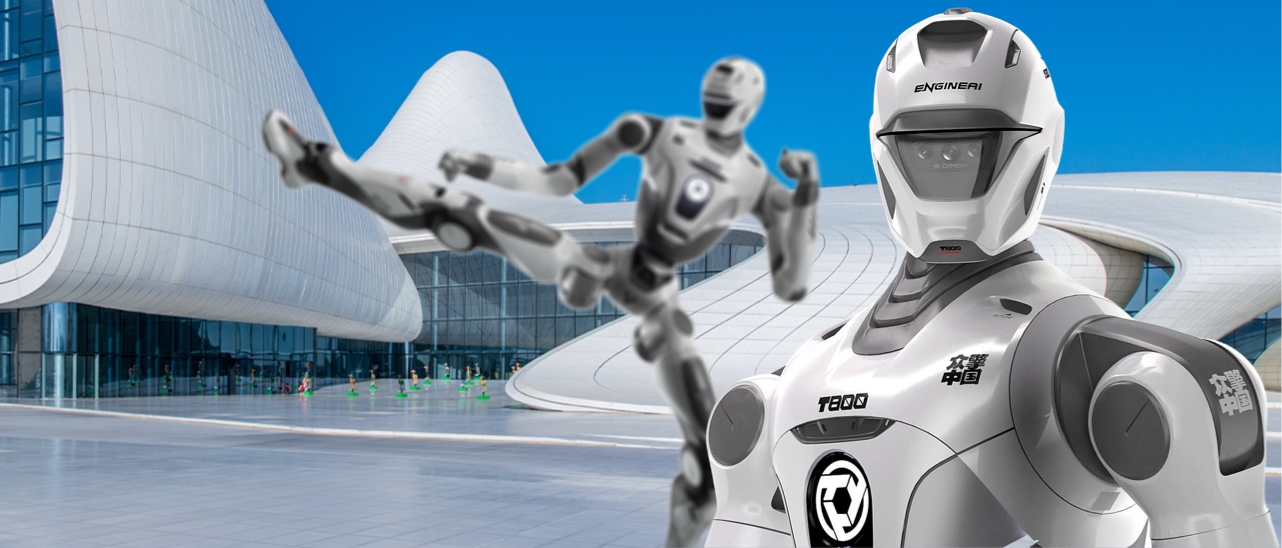
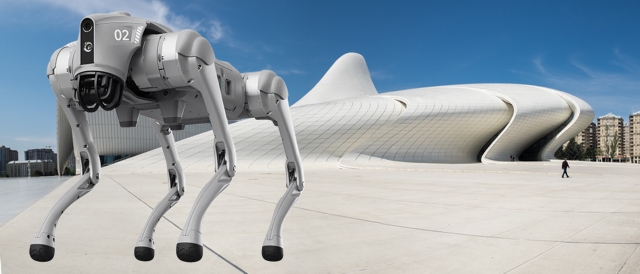
- Inspire: robots that spark curiosity in schools, libraries, makerspaces and science centres, such as the compact Noetix BUMI EDU humanoids (Air, PRO and MAX), the FX Aegis Edu robot dog, and UBTECH's Cruzr 1S as an interactive campus guide.
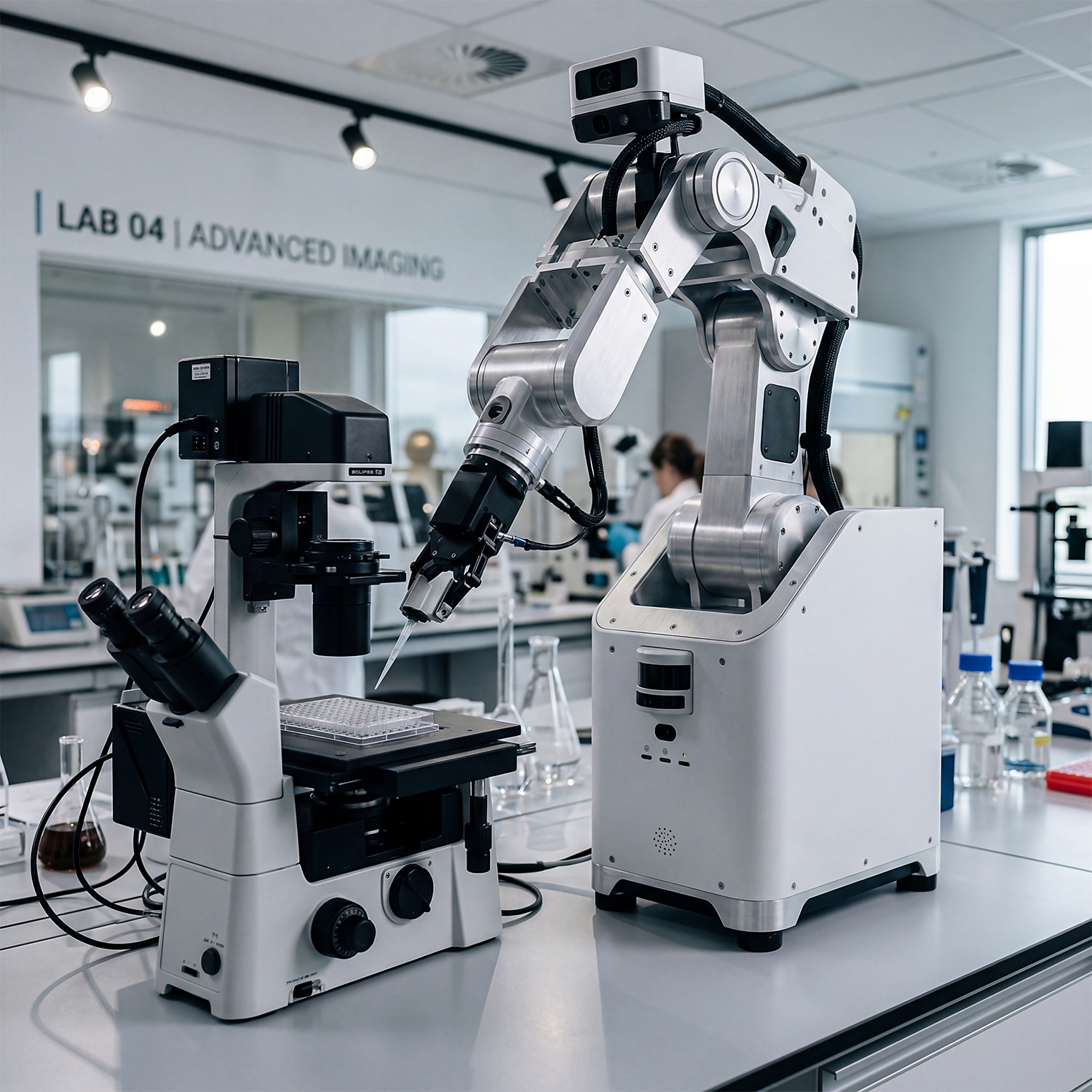
- Train: platforms for hands-on programming and maintenance in colleges, polytechnics and technical programs. That includes the Unitree R1 EDU ladder, from the U1 Standard to the U5 Pro C, alongside robot dogs like the Unitree Go2 and industrial-style cobots.
- Advance: university-grade humanoids for upper-year projects, graduate programs and labs, led by the Unitree G1 EDU ladder, from the U2 Edu Plus to the dexterous U6 Ultimate D, with the full research range on Research Robots.
Every educational robot is sold by Robots Canada, with classroom setup, teacher onboarding and long-term support available. We provide formal quotations for school boards, colleges and universities, financing is available to qualifying organizations, and delivery and support reach every province and territory.
Background
Stage one: inspire
At the earliest stage, the goal isn't mastery; it's wonder. A robot that walks, waves, dances and responds to code a student wrote gives abstract subjects a body. Mathematics, physics and programming suddenly move. Compact, approachable platforms like the BUMI EDU family and the FX Aegis Edu are designed for this stage: robust enough for curious hands, and programmable enough to grow with a club or class.
Stage two: train
In colleges, polytechnics and technician programs, robotics becomes a profession. Students need to program real platforms, read sensor data, troubleshoot faults and understand the mechanical systems that will fill workplaces. Accessible humanoids like the R1 EDU make it realistic for a program to put several robots in front of students, rather than one behind glass. Paired with robot dogs and cobots, they give technical programs the breadth employers are looking for.
Stage three: advance
At university, students move from learning established techniques to working at the frontier: locomotion control, dexterous manipulation, robot learning and embodied AI. The G1 EDU ladder, with its range of hands from 3-finger grippers to tactile 5-finger dexterous hands, gives upper-year and graduate students the same class of platform used in research labs worldwide.
What makes a robot work in a classroom, not just a lab?
A robot that thrives in a research lab won't necessarily thrive in a classroom. Teaching has its own realities, and the programs that succeed plan for them:
- Ratio matters. One humanoid shared among thirty students is a demonstration, not hands-on learning. Mix fewer high-end robots with more accessible ones, and pair them with simulation so every student gets keyboard time.
- Durability matters. Students learn by making mistakes. Choose platforms suited to the experience level, and budget for spare batteries and parts.
- Safety comes first. Moving robots need defined operating zones, supervision rules and a clear stop procedure. For larger humanoids, a gantry protects students and hardware during practice.
- Teachers need support, not just hardware. The best robot fails if the teacher isn't confident with it. Teacher onboarding and ready-to-use activities matter as much as specifications.
- Plan for the long term. A robotics program runs for years. Think about software updates, replacement batteries and how the program will grow.
Our onboarding is built around educators: we get teachers confident first, so students get the most from every class, in English or French.
Who are educational robots for?
They suit:
- Elementary and secondary schools running STEM courses, robotics clubs and competition teams.
- School boards equipping multiple schools with shared robotics programs.
- Colleges and polytechnics training mechatronics, automation and technician students.
- Universities teaching robotics, AI, engineering and computer science.
- Libraries, makerspaces and science centres offering hands-on public programs.
- Corporate and trades training centres upskilling workers for automated workplaces.
- Indigenous and rural education programs bringing robotics to communities across the country.
For lab-grade platforms, see Research Robots. For robots families enjoy at home, see Consumer Robots.
What are educational robots used for?
- STEM teaching: making mathematics, physics and coding tangible.
- Programming instruction: from block coding to Python and robot software frameworks.
- Technical training: sensors, actuators, maintenance and troubleshooting.
- Robotics competitions: preparing student teams for regional and national events.
- Capstone and graduate projects: university-level locomotion, manipulation and AI.
- Public outreach: inspiring visitors at libraries, museums and open houses.
Pricing and Availability
The educational robots on this page purchase directly, with free shipping on the Unitree EDU ladders and the Cruzr 1S. Further platforms, including the BUMI EDU and FX Aegis Edu, are available across the catalogue.
For institutional purchases, request a formal quotation describing your program: the grade or program level, number of students, the robots you're considering, and any spare batteries, gantries or accessories you need. We prepare quotations for school boards, colleges and universities, support institutional purchase orders, and can recommend a mix of platforms that fits both your curriculum and your budget. Every purchase can include classroom setup, teacher onboarding and long-term support. Financing is available to qualifying organizations, and all purchasing details are available on this page.
Frequently Asked Questions
What's the best educational robot for a high school?
Accessible, programmable platforms like the Noetix BUMI EDU or the FX Aegis Edu are ideal for secondary schools, combining wow factor with real programming. We'll help match the robot to your course.
What's the difference between educational and research robots?
Educational robots are chosen for teaching: durability, ease of use and value per student. Research robots are chosen for discovery: openness, configurability and frontier capability. Some platforms, like the G1 EDU, serve both.
Which robots suit college and polytechnic programs?
The R1 EDU ladder, robot dogs like the Go2, and cobots give technical programs hands-on breadth at a realistic cost per student.
Do you provide teacher training?
Yes. Our onboarding is built around educators, so teachers are confident before students arrive, and it's available in English and French.
Can you quote for a school board purchase?
Yes. We prepare formal quotations for school boards, colleges and universities, and support institutional purchase orders.
Where can I buy educational robots in Canada and what do they cost?
Right here. The educational robots on this page purchase directly, formal quotations are available for institutions, setup, teacher onboarding and support are available with every purchase, financing is available to qualifying organizations, and all purchasing details are on this page.
Summary
Canada's robotics future will be built by people who haven't graduated yet, and the robots they learn on will shape what they can build. From the robot dog that sparks a first line of code, to the humanoid a college student learns to maintain, to the dexterous platform a graduate student teaches to grasp, educational robots carry learners up every step of the ladder. For every Canadian school, college and university building that pipeline, this page is the starting point.