Pudu PUDU T300 Lifting (PUDU T300 Lifting)
In stock
- BRAND:
- PUDU ROBOTICS
- PART #:
- PUDU T300 Lifting
- ORIGIN:
- China
- AVAILABILITY:
- SUBJECT TO AVAILABILITY
- SKU:
- Pudu-PUDU-T300-Lifting
Pudu PUDU T300 Lifting (PUDU T300 Lifting)
In most buildings, heavy goods do not move when they are ready. They move when someone is free to push them. A loaded rack can sit beside a production line or outside a storeroom for half a shift, waiting for a pair of hands. The PUDU T300 Lifting removes that wait. Instead of asking staff to load a deck, it drives under the rack, raises it and takes the entire unit where it needs to go, calling elevators and passing gates along the way. The rack stays the container, and the robot becomes the transport that is always available.
Robots USA is the seller of the PUDU T300 Lifting on this page and supplies it to facilities throughout North America. The Robots USA team prepares your quotation, arranges delivery to your site and supports the robot after commissioning, from early questions about floor layout and building systems to day-to-day help once the unit is running.
Background
Pudu Robotics and the T300 platform
Pudu Robotics is a service robotics manufacturer best known for its delivery and cleaning robots, a lineup you can explore in our Pudu category. The T300 takes the company into heavier internal logistics. It is built around a high-strength load-bearing chassis, and Pudu describes the platform as open and scalable, with an interactive touchscreen intended to make daily operation simpler and faster. The published material identifies two versions: the PUDU T300 Standard (WTID01) and the PUDU T300 Lifting (WTIDL1). According to that material, the lifting feature is only available on the WTIDL1.
How the lifting chassis works
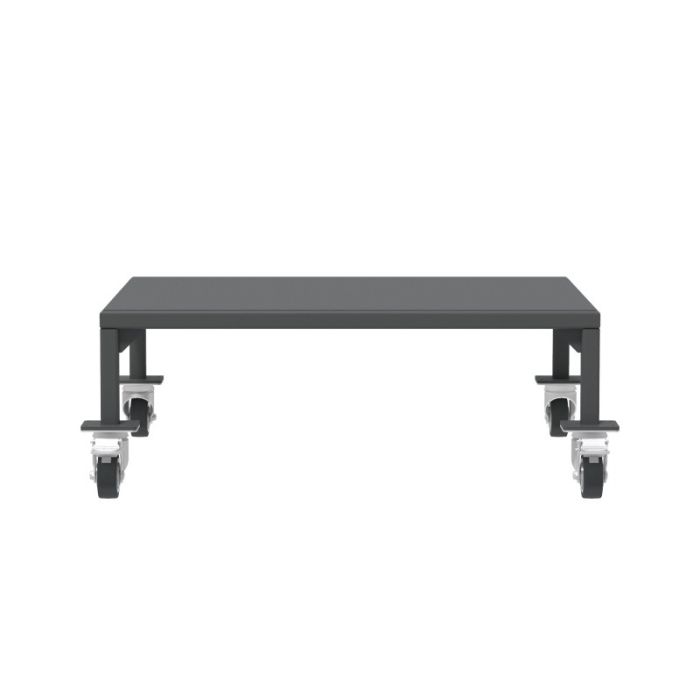
Per the published specification, the T300 chassis is designed to fit under a shelf and lift it up. Once the rack is raised, the robot carries it as a single load, and Pudu reports that this rack provides a larger carrying space than the robot's own chassis. In practical terms, the footprint of the cargo is set by the rack, not by the robot. Alongside Lifting mode, the robot is reported to offer Delivery mode and Cruise mode, so the same unit can switch between rack transport and other tasks as the day requires.
Technical Specifications
| Specification | Value |
|---|---|
| Model | WTIDL1 (lifting version) |
| Overall weight | 81 kg |
| Battery capacity | 30 Ah |
| Battery life | 8 hours |
| Charging | Fast charging in 2 hours |
| Operating modes | Delivery mode, Cruise mode, Lifting mode |
| Navigation | VSLAM+ and LiDAR |
| Path clearance | 60 cm |
| Thresholds | 20 mm |
| Grooves | 35 mm |
| Interface | Interactive touchscreen |
| Building integration | Elevator access, gate/turnstile integration, remote call |
| IoT capabilities | Elevator and e-gate control, app-based and pager calling, API interfaces |
| Hardware ports | External power and USB ports |
| Manual assist | Electric power-assist system for hand-pushing |
| Lifting payload | Not published |
| Lifting height | Not published |
| Lifting speed | Not published |
| Dimensions (Lifting version) | Not published |
| IP rating | Not published |
| Operating temperature | Not published |
| What is in the box | Not published |
Specifications are shown as published by the manufacturer, several from a single source, and are confirmed against the datasheet at quotation, including every item marked as not published.
What does the Lifting version add to the T300?
The difference is the workflow, not just the hardware. A robot that carries goods on its own deck still depends on someone to stack the load at the start and clear it at the end. The WTIDL1 is described as picking up the rack itself, which means the handoff happens at the rack rather than at the robot. Staff can fill a rack whenever it suits them, and the robot collects it when the task is dispatched.
That capability comes with a heavier machine. The published figure for the Lifting version is 81 kg, which reflects the added lifting hardware. Buyers should also note what Pudu has not yet put in writing: the manufacturer has not published the lifting payload, lifting height or lifting speed, nor the dimensions of the Lifting version. Those figures matter when you match the robot to racks you already own, so Robots USA confirms them at quotation. The same applies to the IP rating and operating temperature range, which have not been published and are confirmed before you order.
How does the PUDU T300 Lifting move through a building?
Pudu reports that the navigation system combines VSLAM+ and LiDAR, allowing the robot to adapt to changing layouts without complex setup. That matters on floors where racks, carts and pallets move around every day. Per the published specification, the T300 works in corridors with 60 cm path clearance and overcomes 20 mm thresholds and 35 mm grooves, the kind of door sills and floor joints that stop many wheeled carts.
Moving between floors and zones is a confirmed strength. The T300 supports elevator access, gate and turnstile integration and remote call functions, so a single task can cross several spaces without a person riding along. The reported IoT toolkit includes elevator and e-gate control, app-based and pager calling, and API interfaces for connecting the robot to your own systems, plus external power and USB ports for added hardware. When a job needs a human touch, such as building the initial map, the confirmed electric power-assist system makes the robot easy to push by hand. With an 8-hour battery life and fast charging in 2 hours, the robot is built to cover a full shift and get back to work quickly.
Who is the PUDU T300 Lifting for?
The strongest fit is any operation that already moves goods on wheeled racks or shelving and loses staff time to pushing them. Manufacturing plants feeding parts to assembly lines, distribution and warehouse teams shuttling stock between zones, and hospitals moving linens, supplies or meal carts between floors all share that pattern. Large hotels, campuses and back-of-house operations in retail or hospitality fit as well, especially where elevators and secured doors stand between the origin and the destination.
Not every site needs the lifting function. If your loads are placed directly on a robot rather than on racks, the PUDU T300 Standard (WTID01) may be the simpler choice, and Robots USA can compare the two versions for your floor plan. For lighter front-of-house delivery or for cleaning tasks, the broader Pudu range offers dedicated models.
What is the PUDU T300 Lifting used for?
- Line-side supply: collecting racks of components from storage and delivering them to production cells on demand.
- Finished-goods removal: taking full racks away from the end of a line so operators keep working.
- Warehouse zone transfers: moving shelving units between receiving, storage and dispatch areas.
- Hospital logistics: transporting supply, linen or meal racks between departments and across floors by elevator.
- Back-of-house hotel operations: shifting housekeeping and catering racks through service corridors and gates.
- Scheduled cruise routes: running repeated loops in Cruise mode to serve fixed stations throughout a facility.
Pricing and Availability
The PUDU T300 Lifting is sold by quotation, because the right configuration depends on your racks, floor layout, elevators and the systems you want the robot to connect with. Share those details with Robots USA and we will prepare a quotation built around your site. Delivery, customs and ongoing support are arranged together with that quotation. To get started, a quotation request for the PUDU T300 Lifting is available on this page.
Frequently Asked Questions
Which model number is the lifting version?
The published material identifies the lifting version as WTIDL1 and states that the lifting feature is only available on that model. The Standard version is listed as WTID01.
How much can the PUDU T300 Lifting lift?
The manufacturer has not published the lifting payload, lifting height or lifting speed. Robots USA confirms these figures against the datasheet at quotation.
How long does the battery last?
The T300 offers an 8-hour battery life and supports fast charging in 2 hours. The battery capacity is reported as 30 Ah.
Can the robot use elevators and pass through gates?
Yes. The T300 supports elevator access, gate and turnstile integration and remote call functions for operations across floors and zones.
Does it require a complex installation?
Pudu reports that the VSLAM+ and LiDAR navigation adapts to changing layouts without complex setup. Robots USA reviews your site during the quotation to plan commissioning.
Can staff move the robot by hand?
Yes. An electric power-assist system makes hand-pushing easier when manual intervention or map generation is needed.
Where can I buy the PUDU T300 Lifting and what does it cost?
You can buy the PUDU T300 Lifting from Robots USA. Pricing is provided by quotation based on your site and configuration, so request yours on this page.
Summary
The costliest part of moving heavy goods inside a building is often the waiting, not the distance. The PUDU T300 Lifting is designed to end that wait by lifting the racks you already use and carrying them through corridors, elevators and gates without tying up your staff. It pairs a confirmed 8-hour battery life and 2-hour fast charging with elevator, gate and remote call support, while a power-assist system keeps manual handling easy. Lifting-specific figures that Pudu has not yet published are confirmed with your quotation from Robots USA. If you want your racks to move when they are ready rather than when someone is free, this page is the starting point.