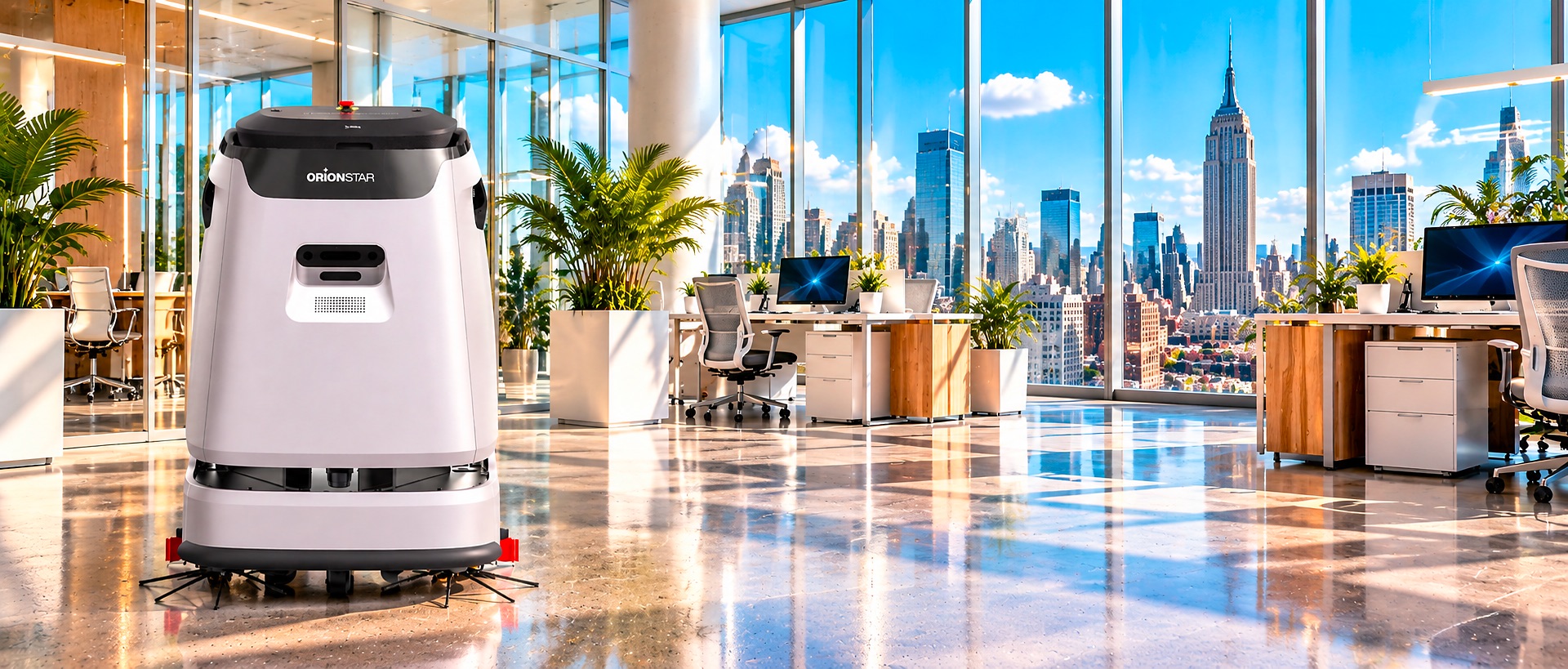
PUDU T300 Towing

In stock
- BRAND:
- PUDU ROBOTICS
- PART #:
- PUDU T300 Towing
- ORIGIN:
- China
- AVAILABILITY:
- SUBJECT TO AVAILABILITY
- SKU:
- PUDU-T300-Towing
PUDU T300 Towing
In many facilities, the heaviest machine on the floor spends much of its day on the lightest job. A forklift and its certified driver shuttle a rolling cart of components from the warehouse to the line, park it, and drive back empty. That trip repeats dozens of times per shift. It is work that matters, but it does not need a forklift. The PUDU T300 Towing is built for that gap. It is an autonomous mobile robot configured to pull wheeled loads with a confirmed towing capacity of 400 kg. It finds its way with VSLAM & Lidar SLAM rather than painted lines, and it frees both the truck and the operator for work that actually requires them.
Robots USA sells the PUDU T300 Towing and supplies it to industrial and logistics buyers in the United States and Canada. Robots USA builds each quotation around the site in question. It arranges delivery and import formalities and stays the point of contact for configuration, commissioning questions and after-sales support once the robot is running routes.
Background
PUDU ROBOTICS: from service floors to factory floors
PUDU ROBOTICS built its reputation on commercial service robots for restaurants, hotels and public buildings, where machines must navigate around people who never asked to share space with a robot. That experience shaped the company's approach to autonomy. Its robots are expected to work in changing, crowded environments and to be simple enough for frontline staff to operate. The T300 family brings that approach into industry. Buyers who already know the brand from its service lineup, listed in our Pudu category, will recognize the emphasis on deployment speed and everyday usability.
One platform, several jobs
The T300 is not a single-purpose machine. PUDU ROBOTICS designs it as a modular platform whose accessories cover delivery, lifting, towing and following. The sources name three versions: the PUDU T300 Standard, the PUDU T300 Lifting and the PUDU T300 Towing. The Towing version is the configuration for facilities whose material already travels on wheels. Instead of loading goods onto the robot, the robot goes to the cart. Shared platform features include auto-charging and quick battery swap for 24/7 operations, elevator integration for multi-floor tasks, and compliance with ISO 3691-4, the safety standard for driverless industrial trucks.
Technical Specifications
| Specification | PUDU T300 Standard | PUDU T300 Lifting | PUDU T300 Towing |
|---|---|---|---|
| Towing capacity | Not stated | Not stated | 400 kg |
| Run-time (no load) | Not stated | 12 h | Not published |
| Maximum speed | Not stated | 1.2 m/s 3.94 ft/s | Not published |
| Machine weight | 65 kg (143.3 lbs ) (reported) | 81 kg 178.57 lbs | Not published |
| Machine dimensions | 83.5 cm x 50 cm x 135 cm (32.8 in x 19.6 in x 53.1 in) (reported) | Not stated | Not published |
| Navigation methods | VSLAM & Lidar SLAM (T300 platform) | VSLAM & Lidar SLAM (T300 platform) | VSLAM & Lidar SLAM (T300 platform) |
| Battery capacity | 30Ah (T300 platform, reported) | 30Ah (T300 platform, reported) | 30Ah (T300 platform, reported) |
| Charging time | 2h (from 0% to 90%) (T300 platform, reported) | 2h (from 0% to 90%) (T300 platform, reported) | 2h (from 0% to 90%) (T300 platform, reported) |
| Threshold crossing height | Maximum 20 mm (0.78in) (T300 platform, reported) | Maximum 20 mm (0.78in) (T300 platform, reported) | Maximum 20 mm (0.78in) (T300 platform, reported) |
| Groove crossing width | Maximum 35 mm (1.37 in) (T300 platform, reported) | Maximum 35 mm (1.37 in) (T300 platform, reported) | Maximum 35 mm (1.37 in) (T300 platform, reported) |
| Path clearance | Minimum 60cm(23.6 in) (T300 platform, reported) | Minimum 60cm(23.6 in) (T300 platform, reported) | Minimum 60cm(23.6 in) (T300 platform, reported) |
| Safety standard | Complies with ISO 3691-4 | Complies with ISO 3691-4 | Complies with ISO 3691-4 |
| Towing attachment weight | — | — | Not published; confirmed at quotation |
| Towing attachment dimensions | — | — | Not published; confirmed at quotation |
| Towing hitch compatibility | — | — | Not published; confirmed at quotation |
| IP rating | Not published | Not published | Not published; confirmed at quotation |
| Operating temperature | Not stated | Not stated | Not published; confirmed at quotation |
| What is in the box | Not published | Not published | Not published; confirmed at quotation |
Figures marked "T300 platform" are published for the range without a version attribution, and all specifications are given as published and confirmed against the datasheet at quotation.
What does the Towing version add to the PUDU T300 platform?
The Standard and Lifting versions carry goods on or under the robot. The Towing version changes the logic: the robot becomes the motive unit and the cart stays the carrier. That matters because many facilities have years of investment in their carts. Those carts are sized to their bins, racks and line-side stations. A towing robot lets that equipment stay in service while the walking and driving between stations moves to automation. The confirmed figure that defines this version is its 400 kg towing capacity.
Buyers should be clear about what has not been published for this configuration. The manufacturer has not released the weight or dimensions of the towing attachment, a hitch compatibility list, an IP rating or an operating temperature range for the towing version. These points decide whether your existing carts can be coupled as they are. Robots USA confirms them against the datasheet at quotation. The run-time, speed and machine weight in the table belong to the Lifting version. They should not be read as Towing figures until the manufacturer states them for this configuration.
How does the PUDU T300 Towing handle safety and multi-floor routes?
A robot pulling a loaded cart through shared aisles has to earn trust. The T300 complies with ISO 3691-4, the standard that governs driverless industrial trucks and their safety functions. That gives safety managers a recognized framework for their risk assessment. For obstacle detection, the platform is reported to use LiDAR sensors and depth cameras, per the published specification. Navigation combines VSLAM & Lidar SLAM, so routes are mapped rather than taped to the floor. Changing a route is a software task, not a maintenance job.
Vertical movement is often where cart logistics breaks down. Elevator integration allows the T300 to carry out multi-floor tasks, so a mezzanine or second production level can join the same automated flow. Published platform figures, still to be confirmed against the datasheet, put the threshold crossing height at a maximum of 20 mm (0.78in), the groove crossing width at a maximum of 35 mm (1.37 in) and the path clearance at a minimum of 60cm(23.6 in). A site survey should check doorways, dock plates and elevator gaps against these values. Auto-charging and quick battery swap are designed to keep the robot available around the clock instead of parked at a charger mid-shift.
Who is the PUDU T300 Towing for?
The clearest fit is a manufacturer or distribution center that already moves material on rolling carts and wants to take repetitive tow runs away from people and forklifts. Production managers feeding assembly lines, warehouse supervisors staging outbound orders and maintenance teams moving parts between buildings on a shared floor plate all fall into this group. Facilities spread over several floors gain from elevator integration. Operations running multiple shifts gain from auto-charging and battery swap.
Not every buyer needs a tugger. If your loads travel in totes or boxes rather than on carts, the PUDU T300 Standard is the more direct route, since goods ride on the robot itself. If your material sits on racks or shelving units that should be picked up from below, the PUDU T300 Lifting is built for that job. Its published figures are the 12 h no-load run-time, 1.2 m/s 3.94 ft/s speed and 81 kg 178.57 lbs machine weight. Robots USA can help you compare the three versions against your actual flows before you commit.
What is the PUDU T300 Towing used for?
- Line-side replenishment: pulling carts of components from stores to assembly stations on a fixed loop.
- Work-in-progress transfer: moving partly finished goods between process steps without a forklift trip.
- Outbound staging: bringing picked and packed carts from packing areas to shipping docks.
- Multi-floor logistics: using elevator integration to link production levels, mezzanines and storage floors.
- Empty-cart returns: collecting empty carriers and returning them to their origin so stations never run dry.
- Round-the-clock shuttles: sustaining night and weekend tow routes with auto-charging and quick battery swap.
Pricing and Availability
Robots USA prices the PUDU T300 Towing by quotation, because the right configuration depends on your carts, routes, floors and integration needs. Send us a description of your site and the loads you want to tow, and we will confirm the unpublished points, from hitch compatibility to the towing attachment's weight, against the datasheet. Delivery, customs and support are arranged with the quotation. To start the conversation, the quotation request for the PUDU T300 Towing is available on this page.
Frequently Asked Questions
How much can the PUDU T300 Towing pull?
The towing capacity is 400 kg. Real-world performance also depends on your carts and floor conditions, which Robots USA reviews at quotation.
Does the robot need magnetic tape or floor markers?
No. It navigates with VSLAM & Lidar SLAM, so routes are mapped digitally rather than marked on the floor.
Is the PUDU T300 Towing safety certified?
The T300 complies with ISO 3691-4, the safety standard for driverless industrial trucks. Obstacle detection is reported to rely on LiDAR sensors and depth cameras.
Will my existing carts work with it?
The manufacturer has not published a towing hitch compatibility list or the towing attachment's dimensions. Compatibility with your carts is confirmed at quotation.
Can it run around the clock?
Yes. The platform offers auto-charging and quick battery swap for 24/7 operations. The battery is reported at 30Ah, with a published charging time of 2h (from 0% to 90%), to be confirmed against the datasheet.
Can it work across several floors?
Yes. Elevator integration allows the robot to carry out multi-floor tasks. Your elevator setup is reviewed as part of the site assessment.
Where can I buy the PUDU T300 Towing and what does it cost?
You can buy it from Robots USA, which supplies buyers in the United States and Canada. The cost is set by quotation for your site, so request one on this page.
Summary
The case for the PUDU T300 Towing comes down to matching the machine to the job. Moving a loaded cart from one station to the next does not need a forklift and a licensed driver. It needs a reliable, safe and tireless tug that follows a mapped route. The T300 Towing offers a confirmed 400 kg towing capacity, VSLAM & Lidar SLAM navigation, ISO 3691-4 compliance, elevator integration and a platform designed for 24/7 operation. Some details remain unpublished, notably the towing attachment's specifications and hitch compatibility, and Robots USA settles those against the datasheet before you order. If your forklifts are spending their shifts on cart runs, this page is the starting point.