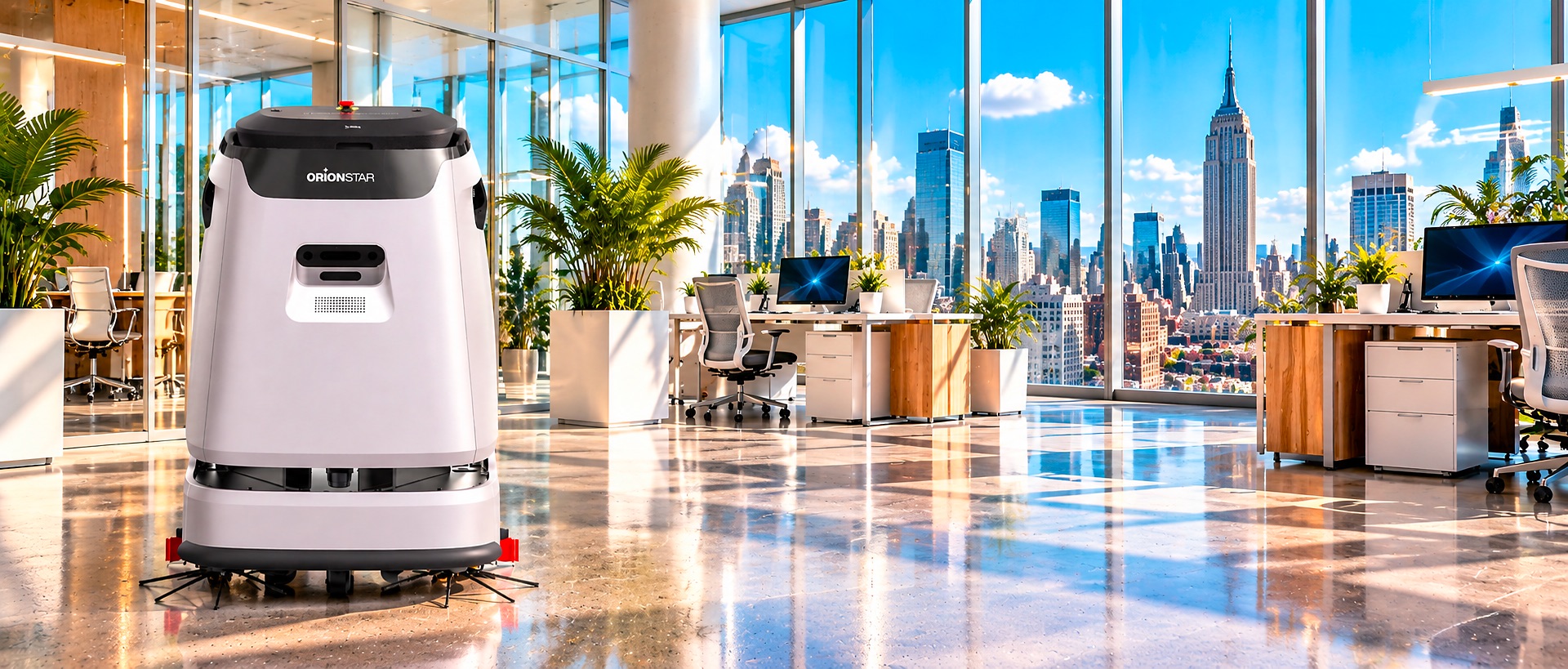
PUDU D7 Wheeled Humanoid Robot

In stock
- BRAND:
- PUDU ROBOTICS
- MODEL:
- D7
- ORIGIN:
- China
- AVAILABILITY:
- SUBJECT TO AVAILABILITY
- SKU:
- PUDU-D7
PUDU D7 Wheeled Humanoid Robot
Every autonomous delivery robot eventually reaches the same wall: it can cross a building with a load, but once it arrives, someone still has to press, lift, open or place. The PUDU D7 Wheeled Humanoid Robot is PUDU ROBOTICS' answer to that final arm's length. Instead of chasing a walking biped, it sets a human-like torso with bionic arms on a fully omnidirectional wheeled chassis, trading legs for a base that turns in place and keeps moving. Think of it less as a machine imitating a person and more as a mobile platform that finally has hands.
Robots USA sells the PUDU D7 Wheeled Humanoid Robot and supplies it to organizations across the United States and Canada. Robots USA prepares each quotation, confirms which generation of the robot fits the project, arranges delivery and remains the point of contact for support once the robot is working on site.
Background
From service robotics to embodied intelligence
PUDU ROBOTICS built its reputation on service robots that navigate restaurants, hotels and commercial buildings on their own, carrying and delivering without supervision. The PUDU D7 extends that experience into manipulation. It was developed by Pudu X-Lab, the company's R&D arm, whose projects are grouped in our X-Lab category. When the first generation was unveiled in 2024, PUDU presented it as the company's first general embodied intelligent semi-humanoid robot: a machine meant to perceive its surroundings, decide and act physically, rather than simply follow a route from point A to point B.
Hierarchical control and a second, industrial generation
The first-generation D7 relies on a hierarchical control system, described as high-level planning and low-level planning. The upper layer handles abstract, strategic decisions such as what to fetch and where to take it, while the lower layer manages real-time, sensory-based actions such as positioning the arm and adjusting a grip. In 2026, PUDU announced a next-generation PUDU D7 positioned as an industrial semi-humanoid for manufacturing and industrial environments. According to the launch announcement, this version is powered by PuduFM 1.0 and moves beyond the traditional separation between navigation and manipulation, treating driving and handling as one continuous task. These details come from a single source and should be confirmed against the datasheet at quotation.
Technical Specifications
| Specification | PUDU D7 (2024, first generation) | PUDU D7 (2026, next-generation industrial) |
|---|---|---|
| Product type | General embodied intelligent semi-humanoid robot | Industrial semi-humanoid robot for manufacturing and industrial environments (reported) |
| Design | Human-like upper body with robotic arms, fully omnidirectional chassis | Not stated in the sources |
| Height | 165 cm | Not stated in the sources |
| Weight | 45 kilograms | Not stated in the sources |
| Arm reach | 65 cm | Not stated in the sources |
| Degrees of freedom | 30, expanding to 50 with a dexterous hand attachment | Not stated in the sources |
| Lift / payload | Bionic arms lift 10 kilograms | Up to 14 kg (30.9 lbs) (reported) |
| Working height | Not stated in the sources | Up to 2 meters (6.6 ft) (reported) |
| End-point precision | 0.1 millimeters | Not stated in the sources |
| Battery | Exceeding 1 kWh | Fully autonomous battery swapping (reported) |
| Runtime | Over 8 hours continuous | Not stated in the sources |
| Movement | 360-degree omnidirectional | Autonomous cart pushing across facilities (reported) |
| Maximum speed | 2 m/s | Not stated in the sources |
| Slope stability | Up to 10 degrees | Not stated in the sources |
| Control / AI | Hierarchical control (high-level and low-level planning) | PuduFM 1.0 (reported) |
| Chassis dimensions | Not published; confirmed at quotation | |
| IP rating | Not published; confirmed at quotation | |
| Charging time | Not published; confirmed at quotation | |
| Connectivity | Not published; confirmed at quotation | |
| Operating temperature | Not published; confirmed at quotation | |
| Compute platform | Not published; confirmed at quotation | |
| What is in the box | Not published; confirmed at quotation |
Specifications are given as published by the manufacturer for each generation and are confirmed against the datasheet at quotation.
Why does the PUDU D7 use wheels instead of legs?
Walking robots attract attention, but most commercial and industrial floors are flat, and on flat floors a wheeled base is simply the more practical choice. The first-generation D7 makes that trade deliberately. Its chassis offers 360-degree omnidirectional movement, so it can slide sideways along a shelf or rotate in front of an elevator panel without a three-point turn. PUDU publishes a maximum speed of 2 m/s and stability on slopes up to 10 degrees, which covers the ramps and thresholds common in buildings.
Freeing the design from balancing on two legs also lets the engineering effort go where the work happens: the arms. The first generation offers a 65 cm reach, 30 degrees of freedom that grow to 50 with a dexterous hand attachment, a 10-kilogram lift and 0.1-millimeter end-point precision. Combined with a battery exceeding 1 kWh and more than 8 hours of continuous operation, the result is a robot designed to spend a full shift handling objects rather than managing its own balance.
What does the 2026 industrial PUDU D7 change?
The next-generation PUDU D7 points the same concept at factories and warehouses. Per the launch announcement, it supports a payload of up to 14 kg (30.9 lbs) and can operate at heights of up to 2 meters (6.6 ft), which PUDU links to working with high-rack storage systems. It is also reported to swap its own batteries autonomously, aimed at around-the-clock operations, and to push carts and transport materials across facilities on its own.
The deeper change, as reported, is PuduFM 1.0, which PUDU says moves the robot beyond treating navigation and manipulation as separate problems. Because all of these points rest on a single source, and because the announcement does not restate the height, weight, speed or runtime of the new generation, buyers should never transfer first-generation figures to it. Robots USA confirms the exact figures for the generation being quoted against the current datasheet.
Who is the PUDU D7 Wheeled Humanoid Robot for?
Operators of service buildings, such as hotels, hospitals, offices and residential towers, are the natural fit for the first generation. Its published strengths in elevator operation, item transport and sorting match the routine handling that keeps these buildings running, and its omnidirectional base suits corridors and lobbies.
Manufacturers, logistics providers and warehouse operators should look at the 2026 industrial generation instead. Its reported higher payload, 2-meter working height, autonomous battery swapping and cart pushing are aimed squarely at multi-shift material flow and high-rack storage, so it is the version to request in a quotation for those sites.
Research groups, system integrators and innovation teams form a third segment. A platform built around embodied intelligence and a hierarchical control system gives them a practical base for piloting mobile manipulation before scaling up. Buyers comparing other machines that combine a wheeled base with a humanoid upper body can browse our Wheeled Humanoids category.
What is the PUDU D7 Wheeled Humanoid Robot used for?
- Elevator operation: the first generation is designed to work elevators, letting it move between floors without human help.
- Item transport: it carries objects between rooms, departments and floors inside a building.
- Sorting: its bionic arms and precise end-point control suit picking and sorting items into place.
- High-rack handling: the industrial generation is reported to reach up to 2 meters (6.6 ft) for high-rack storage systems.
- Cart pushing: the 2026 version is reported to push carts and move materials across facilities autonomously.
- Around-the-clock operations: reported autonomous battery swapping on the industrial generation targets continuous multi-shift work.
Pricing and Availability
Robots USA quotes the PUDU D7 Wheeled Humanoid Robot on a per-project basis, because the right generation, hand attachment and integration scope depend on the site and the tasks. Delivery, customs and support are arranged together with the quotation, so the full scope is agreed before the robot ships. A quotation request for the PUDU D7 Wheeled Humanoid Robot is available on this page.
Frequently Asked Questions
Is the PUDU D7 a full humanoid robot?
No. It is a semi-humanoid: a human-like upper body with robotic arms mounted on a fully omnidirectional wheeled chassis rather than legs.
How long does the PUDU D7 run on one charge?
The first generation runs continuously for over 8 hours on a battery exceeding 1 kWh. The 2026 industrial generation is reported to support fully autonomous battery swapping; its runtime is confirmed at quotation.
How much can the PUDU D7 lift?
The first generation's bionic arms lift 10 kilograms. The industrial generation is reported to support a payload of up to 14 kg (30.9 lbs), to be confirmed against the datasheet at quotation.
What is the IP rating and operating temperature range?
The manufacturer has not published an IP rating or an operating temperature range for either generation. Both are confirmed at quotation.
Which generation will Robots USA supply?
Robots USA confirms the generation and configuration in the quotation, based on whether the project is a service building or an industrial site.
What comes in the box, and how long does charging take?
Neither the box contents nor the charging time has been published by the manufacturer. Robots USA confirms both at quotation, along with connectivity and compute platform details.
Where can I buy the PUDU D7 Wheeled Humanoid Robot and what does it cost?
You can buy it from Robots USA, which supplies it across the United States and Canada. The cost depends on the generation, configuration and project scope, so request a quotation on this page.
Summary
The PUDU D7 Wheeled Humanoid Robot closes the gap that delivery robots leave behind: the moment when arriving is not enough and something has to be pressed, lifted or sorted. The first generation does it with an omnidirectional base, bionic arms with up to 50 degrees of freedom and a full shift of runtime, while the 2026 industrial generation is reported to carry the idea into high racks, cart pushing and around-the-clock operation. For a building or a facility that needs a mobile platform with hands, quoted and supported by Robots USA, this page is the starting point.