
OrionStar GreetingBot Mini
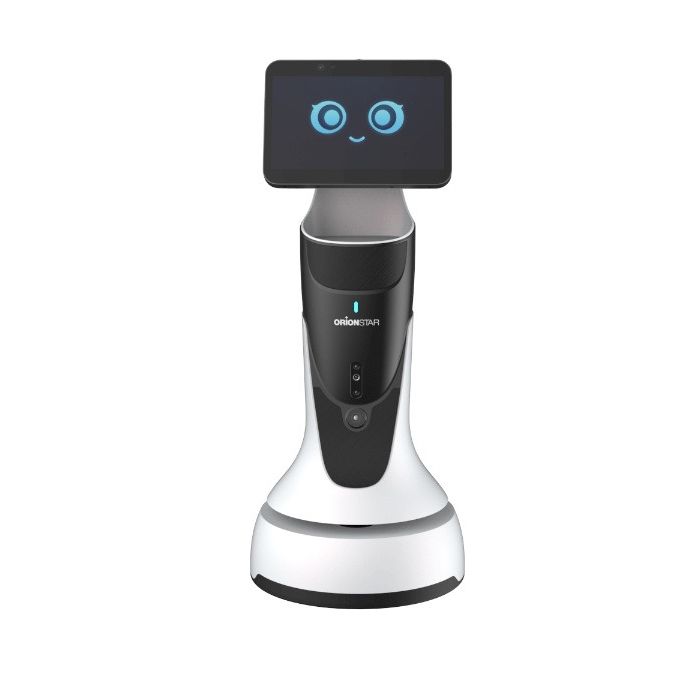
In stock
- BRAND:
- ORIONSTAR
- MODEL:
- GREETINGBOT MINI
- ORIGIN:
- China
- AVAILABILITY:
- ALLOW 2-4 WEEKS FOR DELIVERY
- SKU:
- OrionStar-GreetingBot-Mini
Buy now, pay later
OrionStar GreetingBot Mini
Every reception area faces the same problem at nine in the morning: the room is loudest exactly when the most people need help. Footsteps, conversations, rolling luggage and ringing phones all compete with the one question a visitor actually came to ask. The OrionStar GreetingBot Mini is built for that moment. It is a compact greeting and guiding robot that hears through the noise, answers in a powerful voice, shows the answer on a large screen and then leads the guest to where they need to go, so the front desk keeps moving when the lobby is at its busiest.
Robots USA sells the GreetingBot Mini to businesses and institutions across the United States. We quote each unit for your site, arrange delivery and import, and support the robot after installation, from first mapping of the space to ongoing help when your team wants to extend what it does.
Background
OrionStar and the GreetingBot line
The GreetingBot Mini is made by Beijing OrionStar technology co., Ltd., a developer of commercial service robots. The company's range covers several jobs that public-facing buildings need done every day: reception and guidance, item delivery, and floor cleaning. Buyers who want to see the wider family can browse the OrionStar category, which also includes the OrionStar GreetingBot Nova, another model in the GreetingBot line, along with delivery and cleaning robots that can share the same building.
Positioning: hearing, speaking and showing in a small footprint
The GreetingBot Mini is a master of greeting and leading. Its design pairs three things that reception work demands: a microphone array that locates who is speaking, an audio system loud enough to be understood across an open lobby, and a large interactive screen that can display more information at a single time than a small face panel. Underneath sits a Qualcomm Snapdragon Octa-Core CPU, and lidar combined with a depth camera handles route navigation and close-following. The chassis needs only a narrow passage, which keeps the robot useful in corridors, between counters and in crowded showrooms where larger platforms struggle.
Technical Specifications
| Specification | Value |
|---|---|
| Manufacturer | Beijing OrionStar technology co., Ltd. |
| Overall size | 410 mm × 410 mm × 1000 mm |
| Screen size | 14-inch |
| Screen resolution | FHD (1920 × 1080) |
| Head camera | 13M high-definition camera × 1, supports photo taking and video calling |
| Microphone array | 6 microphone arrays, 360° sound source positioning |
| Speech recognition accuracy | Greater than 97% in a noisy environment of 75dB |
| Audio system | 30W, 5 separate sound modules, Harman Kardon sound effects |
| Processor | Qualcomm Snapdragon Octa-Core CPU |
| Navigation sensors | Lidar and depth camera (route navigation, close-following) |
| Minimum passage diameter | 55cm |
| Cruising time | 12 H (typical cruising scene) |
| Charging time | ≤4.5 H (charge when turned off) |
| Auto recharge | Returns to the charger when power drops below 10% |
| Multi-robot cooperation | Intelligent priority numbering for collision avoidance without human intervention |
| Development platform | Open platform, supports deep customization |
Specifications are as published by the manufacturer and are confirmed against the datasheet at quotation.
OrionStar has not published the payload, the IP rating, the maximum travel speed, the battery capacity, the power supply rating or the box contents; Robots USA confirms these with you at quotation.
How does the GreetingBot Mini understand visitors in a noisy lobby?
A greeting robot that cannot hear is just a screen on wheels. The GreetingBot Mini addresses this with 6 microphone arrays and 360° sound source positioning, which lets it work out where a voice is coming from rather than simply picking up the loudest sound in the room. Its speech recognition accuracy is greater than 97% in a noisy environment of 75dB, the kind of background level you find in a busy atrium, a retail floor on a Saturday or an exhibition hall between sessions.
Hearing is only half of the exchange. The reply has to carry, and here the robot uses a 30W audio system with 5 separate sound modules and Harman Kardon sound effects. In practice that means a guest standing a few steps away, or a small group gathered around the unit, can follow what it says without leaning in. For a front desk, the result is fewer repeated questions and fewer visitors drifting back to the human staff because they could not catch the answer.
What does the 14-inch screen add at a reception desk?
The 14-inch screen is the feature that sets the GreetingBot Mini apart, because it can show more information at a single time. At FHD (1920 × 1080) resolution, that space is enough for a floor map, a list of meeting rooms, a product page or a sign-in form without forcing the visitor to scroll through tiny panels. Spoken answers and on-screen detail reinforce each other: the robot tells a guest where the conference room is and shows the route at the same moment.
The head camera adds a second channel. The 13M high-definition camera supports photo taking and video calling, so the screen can also become a window to a person, for example a remote concierge or a host who is not in the building yet. Combined with the open development platform, which supports deep customization, the display becomes a surface your own team or integrator can shape around your visitor flow.
Who is the GreetingBot Mini for?
The clearest fit is any organization whose front door sees steady traffic and whose staff spend too much of the day answering the same questions. Corporate headquarters and multi-tenant office buildings can use it to welcome visitors, point them to the right floor and connect them to their host. Hotels and serviced apartments can place it near the lobby as a first point of contact during check-in peaks.
Retailers, car dealerships and brand showrooms benefit from the combination of a large screen and a strong voice, which lets the robot greet shoppers and present products in the same interaction. Banks, government service centers, hospitals and clinics, where visitors often need to be directed to the right counter or department, can use its leading function to walk people where they need to go. Museums, universities, trade shows and event venues are a further segment, especially where the 55cm minimum passage diameter matters in tight corridors and crowded halls.
Developers and system integrators are an audience of their own: the open development platform supports deep customization, so the GreetingBot Mini can be adapted to a specific workflow rather than used only out of the box. If you are weighing it against other reception models, Robots USA can walk you through the GreetingBot range and help match a unit to your space.
What is the GreetingBot Mini used for?
- Front desk greeting: welcomes arriving visitors and answers routine questions so staff can handle the complex ones.
- Guest escorting: leads people to meeting rooms, counters or departments using lidar and depth-camera navigation.
- Information display: uses the 14-inch screen to show maps, schedules, menus or product details alongside spoken answers.
- Remote host connection: uses the head camera for video calling between a visitor and a staff member elsewhere.
- Brand and product promotion: presents offers and announcements in showrooms and retail spaces with a voice that carries.
- Multi-unit venue coverage: runs several robots in one building, with intelligent priority numbering keeping their paths clear.
Pricing and Availability
Robots USA prices the GreetingBot Mini by quotation, because the right configuration depends on your building, the number of units and the custom work you plan. Tell us about your site and your visitor flow, and we will come back with a quotation built around them. Delivery, customs and support are arranged together with the quotation, so you know what installation and after-sales care look like before you commit. To start the conversation, use the quotation request available on this page.
Frequently Asked Questions
How long does the GreetingBot Mini run before it needs charging?
The GreetingBot Mini has a cruising time of 12 H in a typical cruising scene. Charging takes ≤4.5 H when the robot is turned off.
Does it go back to the charger by itself?
Yes. When power drops below 10%, the GreetingBot Mini automatically returns to the charger, so it does not run flat in the middle of the lobby.
Will it fit through narrow corridors and between counters?
The robot has a minimum passage diameter of 55cm, which allows it to operate flexibly in small spaces. Its overall size is 410 mm × 410 mm × 1000 mm.
Can several GreetingBot Mini units work in the same building?
Yes. When the paths of more than one unit intersect, intelligent priority numbering lets them avoid collision without human intervention.
Can we customize what the robot does?
The GreetingBot Mini runs on an open development platform that supports deep customization. Robots USA can discuss your planned integration as part of the quotation.
Can it take photos or make video calls?
Yes. The head carries a 13M high-definition camera that supports photo taking and video calling, so a visitor can be connected to a host who is elsewhere.
Where can I buy the OrionStar GreetingBot Mini and what does it cost?
You can buy it from Robots USA, which supplies and supports it in the United States. Pricing is provided by quotation for your specific project; request yours on this page.
Summary
The hardest minutes at any front desk are the loud, crowded ones, and that is where the GreetingBot Mini earns its place. It locates a speaker with 6 microphone arrays, recognizes speech with greater than 97% accuracy at 75dB, answers through a 30W audio system and backs up every reply on a 14-inch FHD screen. Lidar and a depth camera let it lead guests through spaces as tight as 55cm, it returns to its charger on its own, and several units can share a building without colliding. An open development platform leaves room to shape it around your visitors. If your lobby needs a greeter that keeps up when the room is at its busiest, this page is the starting point.
Specifications
General
Related Products
Out of stock