
MagicLab MagicBot G1 Standard Edition Humanoid Robot
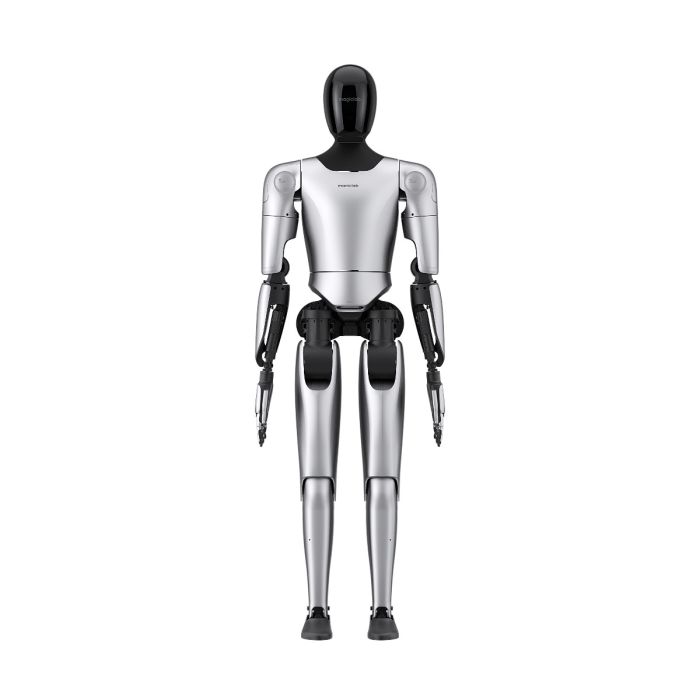
In stock
- BRAND:
- MAGICLAB
- MODEL:
- MAGICBOT Z1 STANDARD EDITION
- ORIGIN:
- China
- Warranty:
- 12 MONTHS
- AVAILABILITY:
- SUBJECT TO AVAILABILITY
- SKU:
- MagicLab-MagicBot-G1
Buy now, pay later
MagicLab MagicBot G1 Standard Edition Humanoid Robot
Ask a humanoid robot to hold a crate out in one hand, then ask it to stand still while carrying weight across its whole frame. The two answers are very different, and the gap between them says more about the machine than any demo clip. The MagicLab MagicBot G1 Standard Edition Humanoid Robot comes with clear answers to both questions, along with its joint count, frame size, onboard computing and battery capacity. That makes this a humanoid you can evaluate on numbers instead of impressions, and it frames every section below. What can one arm do, what can the body bear, and what does that mean for your application?
Robots USA sells the MagicBot G1 Standard Edition and supplies it to companies, universities and research groups across the United States. Our team prepares each quotation, coordinates delivery to your site and stays on as your point of contact for technical support after the robot is commissioned. If you are building a business case for a humanoid pilot, Robots USA helps you line up the specifications, the logistics and the questions to settle before the robot ships.
Background
Magiclab Robotics Technology and the MagicBot line
The MagicBot G1 is built by Magiclab Robotics Technology (Wuxi) Co., Ltd., the company behind the MagicLab brand. Its MagicBot family is a line of bipedal humanoids, and the sources on this product name several designations within it: MagicBot Gen1, MagicBot G1 and G1 Pro. The Standard Edition offered on this page is the G1 entry point, and the G1 Pro is a separate version. Humanoids like this one belong to a class of machines designed to operate in environments built for people. They walk on two legs, reach with two arms and work at a height that matches shelves, benches and control panels without modifying the facility.
Positioning: a working platform at human scale
The figures place the MagicBot G1 in the full-size humanoid category. Its standing frame runs to 1740 mm tall, and it features 42 degrees of freedom across the body. Two design choices matter most for buyers. The first is a load profile that separates what a single arm can handle from what the whole body can carry statically. The second is a high-performance computing module built around a dedicated AI processor rather than a general-purpose controller alone. Together they position the G1 as a platform for developing and testing real tasks, not only for display.
Technical Specifications
The figures below belong to the MagicBot Gen1 designation.
| Specification | MagicBot Gen1 |
|---|---|
| Standing dimensions | 1740*580*280 mm |
| Degrees of freedom | 42 |
| Single-arm load | Up to 7.5 kg |
| Total body static load | Up to 40 kg |
| High-performance computing module | 8-Core CPU + 100 TOPS AI Processor |
| Battery capacity | 25 Ah (1.35 kWh) |
| Manufacturer | Magiclab Robotics Technology (Wuxi) Co., Ltd. |
Specifications are as published by the manufacturer and are confirmed against the datasheet at quotation.
The manufacturer has not published the ingress protection rating, the maximum slope climbing angle, the operating temperature range or the power consumption, so Robots USA confirms these details with you at quotation.
What does the gap between single-arm and whole-body load mean for buyers?
A single arm handles loads of up to 7.5 kg. The whole body supports static loads of up to 40 kg. These are different capabilities, and planning a deployment around the right one prevents disappointment later. The single-arm figure governs tasks where the robot reaches out and manipulates something: lifting a part from a bin, presenting a tool or moving a component between fixtures. The whole-body static figure describes what the frame can bear while holding position, which is relevant when a task loads the torso and both arms together.
For a buyer, this means writing task requirements in the same terms. List the heaviest object each arm must pick up and the heaviest combined load the robot must hold. Note whether the load is held still or carried while walking, because the whole-body figure is a static value and dynamic carrying needs its own planning. A clear task sheet lets Robots USA match your use case to the robot before you commit, and it gives your engineering team a realistic baseline for pilot design.
What does the onboard computing module bring to a MagicBot G1 project?
The MagicBot G1 carries an 8-Core CPU paired with a 100 TOPS AI Processor. In humanoid robotics, that split mirrors a common architecture. General-purpose cores handle system coordination, while a dedicated AI accelerator runs the neural-network workloads behind perception and decision-making. Having that capacity on the robot itself matters for teams that want to process sensor data locally rather than streaming everything to an external workstation.
The energy side of the story is the 25 Ah (1.35 kWh) battery. Runtime depends on the task mix, so operating time for your specific application is a point to work through with Robots USA rather than assume. Research groups and developers should also ask about the software environment, development access and update path as part of the same conversation.
Who is the MagicBot G1 Standard Edition for?
The first group is research laboratories and university departments working on locomotion, manipulation, embodied AI and human-robot interaction. These teams need a full-size bipedal platform with a defined joint count and real onboard computing, and the G1 gives them both in a form that matches the spaces where people live and work.
The second group is industrial innovation teams. Manufacturers and logistics operators testing whether a humanoid can take on repetitive handling at existing workstations can use the load figures to screen candidate tasks early. The third group is service and customer-experience pilots, where a human-sized robot in a lobby, showroom or exhibit is part of the point.
Buyers who are still comparing form factors can browse the wider Humanoids category or narrow the field to Bipedal Humanoids. Within the MagicLab family, the MagicLab MagicBot X1 Full-Size Humanoid Robot and the MagicLab MagicBot Z1 Standard Edition Humanoid Robot are worth a side-by-side look. If the G1 Pro is on your shortlist, Robots USA can set out how the Pro and the Standard Edition compare.
What is the MagicBot G1 Standard Edition used for?
- Embodied AI research: Training and testing perception and control models on a full-size bipedal body with onboard AI compute.
- Manipulation studies: Developing grasping and handling routines within the single-arm load range.
- Industrial task trials: Piloting humanoid handling at workstations designed for human operators.
- Logistics experiments: Testing the movement of light goods between shelves, carts and benches in warehouse settings.
- Education and training: Giving engineering and robotics students hands-on experience with a modern humanoid platform.
- Customer-facing showcases: Engaging visitors in showrooms, exhibitions and innovation centers with a human-sized robot.
Pricing and Availability
Robots USA prices the MagicBot G1 Standard Edition by quotation, so the offer reflects your configuration and your application. Delivery, customs and support are arranged together with the quotation. To start the conversation, share your intended tasks and site details with our team. A quotation request for the MagicLab MagicBot G1 Standard Edition Humanoid Robot is available on this page.
Frequently Asked Questions
How tall is the MagicBot G1?
The MagicBot Gen1 has standing dimensions of 1740*580*280 mm. That places it in the full-size humanoid class, at a working height that matches spaces built for people.
How much can the MagicBot G1 lift?
A single arm handles loads of up to 7.5 kg, and the whole body supports static loads of up to 40 kg. Robots USA can review your specific task loads with you before you order.
How many degrees of freedom does it have?
The MagicBot Gen1 features 42 degrees of freedom.
What computing hardware is on board?
The robot carries a high-performance computing module with an 8-Core CPU and a 100 TOPS AI Processor, which supports local processing of AI workloads.
What is the battery capacity?
The battery capacity is 25 Ah (1.35 kWh). Operating time depends on the application you plan to run.
Does Robots USA support the robot after delivery?
Yes. Robots USA coordinates delivery to your site and remains your point of contact for technical support after the robot is commissioned.
Where can I buy the MagicLab MagicBot G1 Standard Edition Humanoid Robot and what does it cost?
You can buy it from Robots USA, which supplies customers across the United States. Pricing is provided by individual quotation based on your configuration and project, and you can request one directly from this page.
Summary
The gap between what one arm can hold and what the whole body can bear is a useful lens for the MagicBot G1 Standard Edition. The two figures mean different things, and the right one depends on your task. Add 42 degrees of freedom, a 1740 mm standing frame, an 8-Core CPU with a 100 TOPS AI Processor and a 25 Ah (1.35 kWh) battery, and you have a humanoid that research teams and industrial pilots can evaluate on concrete terms. Robots USA handles the quotation, delivery and support that turn that evaluation into a working deployment. For any team ready to match a humanoid to real work, this page is the starting point.