
Lumos Robotics LUS2 Full Size Humanoid Robot
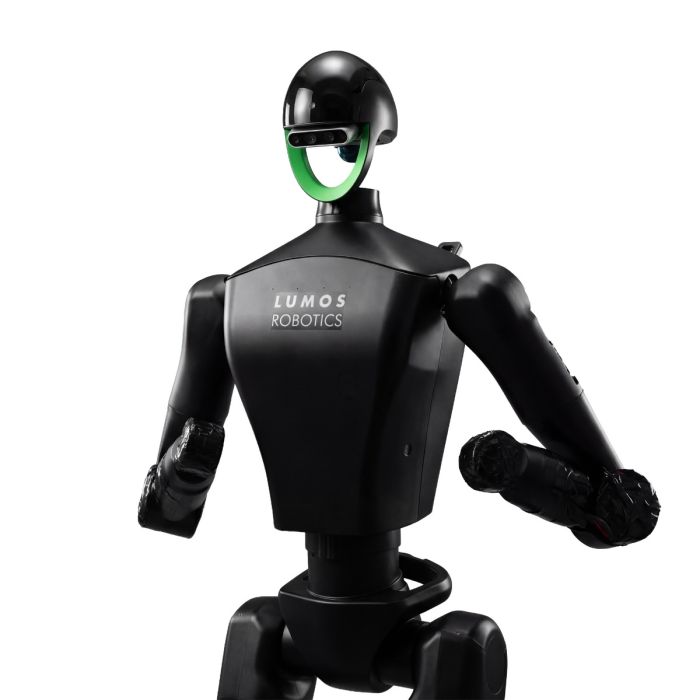
In stock
- BRAND:
- LUMOS ROBOTICS
- PART #:
- LUS2
- ORIGIN:
- China
- AVAILABILITY:
- SUBJECT TO AVAILABILITY
- SKU:
- Lumos-Robotics-LUS2
Lumos Robotics LUS2 Full Size Humanoid Robot
The same machine that drives 360 N·m through its strongest joint is expected to lift a 3 kg object without crushing or dropping it. That tension between raw strength and delicate control is where the Lumos Robotics LUS2 Full Size Humanoid Robot earns its place on a shortlist. The body is built for dynamic movement, with a maximum speed of 2 m/s and the ability to get back on its feet in just 1 second. Each 7-DoF arm, meanwhile, is set up for fine manipulation. For research groups, educators and commercial teams, the real question is not whether a humanoid can move or whether it can grasp. It is whether one platform does both well enough to build serious work on.
Robots USA sells the LUS2 to universities, research labs, schools and companies across the United States. We prepare each quotation around your project, coordinate delivery to your site, and remain your point of contact for technical support once the robot is in your hands.
Background
Lumos Robotics and its humanoid lineup
Lumos Robotics builds humanoid robots for development and deployment, and the LUS 2 is its full-size model. The company designed it for research, education and commercial applications, combining advanced robotics with AI so that a single machine can handle object manipulation, navigation and human-robot interaction. Lumos also offers the Lumos Robotics MOS Dual Arm Humanoid Robot, so buyers who already know the brand can evaluate both platforms through the same supplier.
Full-size humanoids occupy a specific niche in robotics. They are not the cheapest way to automate a single repetitive task; a fixed arm or a wheeled base usually does that more simply. Their value lies in working in spaces designed for people, in studying how legs, arms and perception cooperate, and in giving students and the public a machine they can relate to at human scale. The LUS2 is aimed squarely at that niche.
Positioning: an open, modular platform
The LUS2 is built as a platform you develop on, not a sealed product. Its structure is aluminum alloy, its wiring runs through hollow shafts, and its design is modular. On the software side, it supports ROS2, it supports secondary development, and it receives OTA updates. That combination matters to anyone who plans to write their own controllers, perception pipelines or interaction behaviors rather than run a fixed demo.
Onboard computing comes from an NVIDIA Jetson AGX Orin rated at 275 TOPS, and the robot perceives its surroundings through a 3D LiDAR paired with a binocular depth camera. Advanced proprioceptive sensing supports both dynamic agility and precise force control, which is what allows the same body to move quickly and to handle objects with care.
Technical Specifications
| Specification | Value |
|---|---|
| Product type | Full-size humanoid robot for research, education and commercial applications |
| Height | 160 cm |
| Weight | 57 kg |
| Material | Aluminum alloy |
| Total DoF (joint modules) | 28 |
| Single-arm DoF | 7 |
| Forearm + upper arm length | 520 mm (excl. hand) |
| Single-arm weight | 5.5 kg (excl. hand) |
| Max joint torque | 360 N·m |
| Arm payload | 3 kg, with fine manipulation tasks |
| Maximum speed | 2 m/s |
| Stand-up recovery | Stands up in 1 second |
| Rated voltage | 54 V |
| Battery capacity | 10 Ah |
| Battery life | 2 h |
| Charger | 54 V / 5 A |
| Cooling | Localized air cooling |
| Perception sensors | 3D LiDAR + Binocular Depth Camera |
| Processor | NVIDIA Jetson AGX Orin (275 TOPS) |
| Handheld remote | Yes |
| Software | ROS2 support; secondary development supported; OTA update |
| Design features | Hollow-shaft wiring, modular design |
Specifications are as published by the manufacturer and are confirmed against the datasheet at quotation.
Lumos Robotics has not published an IP rating, a charging time, an operating temperature range, a separate walking-speed figure, details of the hand model, certifications, or depth and width dimensions; Robots USA confirms these at quotation.
How does the LUS2 balance strength and fine manipulation?
The answer sits in how the body is divided. The legs and torso have to absorb impacts, carry 57 kg of robot and move it at up to 2 m/s, which is why the joint modules reach a maximum torque of 360 N·m. That same power is what lets the LUS2 rise from the floor in 1 second, a capability that saves real time in a lab where falls are part of testing new gaits and controllers.
The arms follow a different logic. Each one weighs 5.5 kg without the hand, measures 520 mm from shoulder to wrist, and offers 7 degrees of freedom. Seven joints give the arm redundancy: it can reach the same point with different elbow positions, which helps it work around obstacles or approach an object from a comfortable angle. With a 3 kg payload and proprioceptive sensing supporting precise force control, the arm is built for handling tools, parts and everyday objects rather than heavy lifting.
For developers, this split is useful. You can work on whole-body balance and locomotion with a body that tolerates dynamic motion, then layer manipulation tasks on top without switching platforms.
What does the onboard computing and sensing give developers?
A humanoid that has to stream data to an external workstation is tethered in practice, even if it walks freely. The NVIDIA Jetson AGX Orin inside the LUS2, rated at 275 TOPS, gives teams room to run perception, planning and learned policies on the robot itself. The 3D LiDAR maps the space around the robot for navigation, while the binocular depth camera supplies the close-range depth that grasping and interaction depend on.
ROS2 support means much of the existing robotics ecosystem, from mapping packages to motion planning tools, can be brought onto the platform. Secondary development is supported, so your own code is a first-class citizen, and OTA updates keep the system current without sending the robot away. Localized air cooling manages heat where it builds up, and the handheld remote gives operators direct control during setup, testing and demonstrations.
Who is the Lumos Robotics LUS2 Full Size Humanoid Robot for?
University and institute research labs are the most natural fit. Groups working on legged locomotion, whole-body control, embodied AI or human-robot interaction get a full-size body with open software and onboard compute, so experiments can move from simulation to hardware quickly.
Educators are a second audience. Engineering programs and advanced robotics courses can use the LUS2 to teach perception, control and software integration on a machine students take seriously, and ROS2 support lets coursework build on tools they will use in industry.
Commercial teams make up the third group: innovation departments, system integrators and companies running pilots in showrooms, reception areas or demonstration floors where human-robot interaction is the point. Its human scale and dynamic movement make it a strong ambassador for an organization exploring humanoid technology.
Teams whose project centers on two-arm work may also want to compare the Lumos Robotics MOS Dual Arm Humanoid Robot; Robots USA can quote both side by side. To see the LUS2 alongside other legged platforms, browse our Bipedal Humanoids category, or the wider Humanoids range.
What is the Lumos Robotics LUS2 Full Size Humanoid Robot used for?
- Locomotion research: testing gaits, balance controllers and fall recovery on a body that stands back up in a second.
- Manipulation studies: developing grasping and fine handling routines with 7-DoF arms and force control.
- Autonomous navigation: building mapping and path planning on top of the 3D LiDAR and depth camera.
- Embodied AI development: running perception and learned policies directly on the Jetson AGX Orin.
- Robotics education: teaching ROS2, control and integration on a full-size humanoid in the classroom.
- Human-robot interaction pilots: trialing the robot in public-facing settings such as showrooms and receptions.
Pricing and Availability
Robots USA supplies the LUS2 by quotation, so the offer reflects your configuration, intended use and site. Tell us about your project and we will prepare a quotation built around how and where you plan to use the robot. Delivery, customs and support are arranged with the quotation. To start the process, use the quotation request available on this page.
Frequently Asked Questions
How tall and heavy is the LUS2?
The LUS2 stands 160 cm tall and weighs 57 kg. Its structure is made of aluminum alloy.
How many degrees of freedom does the LUS2 have?
It has 28 degrees of freedom in total across its joint modules. Each arm has 7 degrees of freedom.
What computer runs the LUS2?
The robot uses an NVIDIA Jetson AGX Orin rated at 275 TOPS, which allows perception and control software to run onboard.
How long does the battery last?
Battery life is 2 h from a 10 Ah battery at a rated voltage of 54 V, and the charger is rated 54 V / 5 A.
Does the LUS2 support ROS2 and custom software?
Yes. The LUS2 supports ROS2 and secondary development, and it receives OTA updates.
What sensors does the LUS2 use to perceive its surroundings?
It combines a 3D LiDAR with a binocular depth camera, supported by proprioceptive sensing for dynamic agility and precise force control.
Where can I buy the Lumos Robotics LUS2 Full Size Humanoid Robot and what does it cost?
You can buy it from Robots USA, which supplies it across the United States by quotation. Request a quotation on this page and we will prepare an offer for your configuration, including delivery and support.
Summary
The LUS2 is built around a deliberate balance: joints strong enough to deliver 360 N·m, move the robot at up to 2 m/s and lift it off the floor in a second, paired with 7-DoF arms set up for careful handling of loads up to 3 kg. Onboard NVIDIA Jetson AGX Orin computing, 3D LiDAR and binocular depth sensing, ROS2 support and open secondary development turn that body into a platform researchers, educators and commercial teams can actually build on. If your project needs a humanoid that is both powerful and precise, and you want Robots USA to handle the quotation, delivery and support, this page is the starting point.