AgiBot Expedition A3 Interactive Service Humanoid Robot
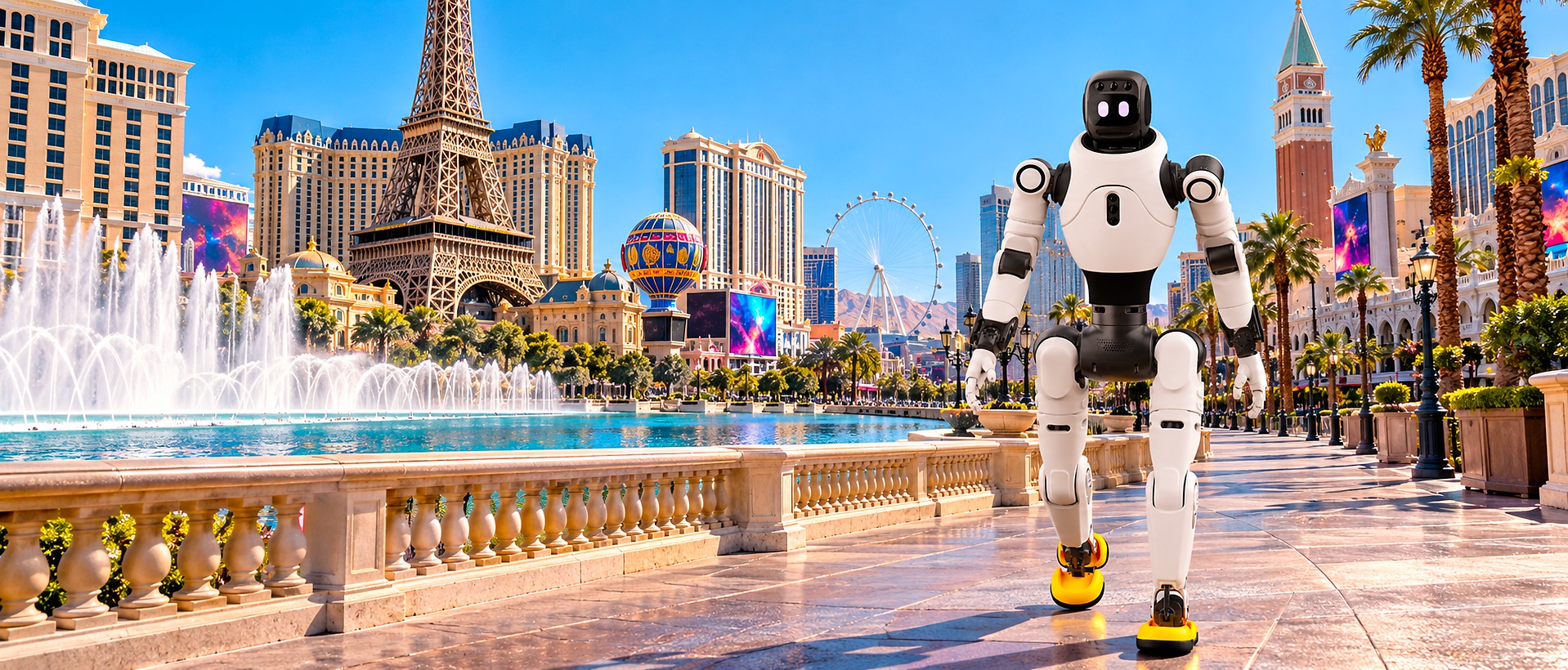
The AgiBot Expedition A3 is a full-size bipedal humanoid robot designed for commercial service environments. Developed by AgiBot, a Shanghai-based robotics company, the Expedition A3 targets industries including retail, hospitality, entertainment, and brand activation. With a production ramp scheduled for 2026 and a unit price of approximately $110,000 USD, the A3 represents one of the more accessible full-capability humanoid platforms available to US businesses exploring robotics deployment.
Overview
AgiBot has moved quickly in the humanoid robotics space. In 2025, the company shipped more than 5,168 humanoid units across eight industries, a deployment scale that few competitors have matched. The Expedition A3 is the company's interactive service model, distinct from its industrial counterparts by its emphasis on human-facing tasks: greeting visitors, answering questions, guiding customers, performing at exhibitions, and supporting staff in high-traffic environments.
The robot stands 173 centimeters tall and weighs 55 kilograms, placing it comfortably within human scale. This proportionality matters in real-world deployments where robots must navigate doorways, counters, and retail fixtures designed for people.
Design and Features
Physical Form Factor
The A3 features an exoskeleton-style leg structure that reduces overall mass without sacrificing structural integrity. Its flexible waist joint allows a natural range of trunk motion, which contributes to more fluid and human-like movement patterns during interaction. The overall silhouette is bipedal and recognizably humanoid, a deliberate design choice for environments where approachability matters.
Each arm carries a payload capacity of 3 kilograms with a tool center point speed of 2 meters per second. This combination allows the A3 to handle light object manipulation tasks, such as carrying a tray, handing over materials, or performing scripted demonstration sequences at trade shows.
Interaction Design
Unlike many service robots that require explicit wake words or button presses to initiate interaction, the A3 supports activation via a shoulder-tap gesture as well as voice commands that do not require a specific trigger phrase. This removes friction from casual public interactions and makes the robot feel more responsive in busy environments like convention centers or retail floors.
Technology and Specifications
| Specification | Value |
|---|---|
| Height | 173 cm |
| Weight | 55 kg |
| Arm payload | 3 kg per arm |
| TCP speed | 2 m/s |
| Battery runtime | 8 to 10 hours |
| Battery system | Dual embedded |
| AI platform | AgiBot Embodied Intelligent Brain (WorkGPT + GO-1) |
AI Platform
The A3 runs on AgiBot's proprietary Embodied Intelligent Brain, which integrates two primary components. WorkGPT handles natural language understanding and task orchestration, while GO-1 manages locomotion and physical coordination. Together they enable the robot to process conversational inputs, navigate dynamic environments, and execute multi-step physical tasks.
AgiBot is a partner in NVIDIA's Isaac GR00T ecosystem. Isaac GR00T is NVIDIA's platform for training and deploying humanoid robot AI, providing access to simulation environments, pre-trained foundation models, and hardware-accelerated inference. For US integrators already working within NVIDIA's stack, this partnership simplifies software development and deployment.
Battery System
The dual embedded battery system provides 8 to 10 hours of operational runtime per charge cycle. For a full retail shift or a day-long trade show event, this runtime is sufficient for continuous operation without mid-day charging interruptions.
Applications and Use Cases
Retail and Customer Service
American retailers have been early adopters of in-store robotics, primarily for inventory scanning and floor cleaning. The A3 extends this into customer-facing roles. A robot that can answer product questions, direct customers to specific aisles, or demonstrate products on the floor represents a new category of retail labor augmentation. In high-volume stores where staff-to-customer ratios are strained, the A3 can absorb routine interactions, freeing human employees for complex service tasks.
Entertainment and Brand Activation
The US events industry, encompassing conventions, sports venues, and experiential marketing, is a natural fit for the A3. Brands use live events to create memorable impressions, and a full-size interactive humanoid robot draws significant attention. The A3 can be scripted for product demonstrations, conduct brand-aligned conversations, and serve as a photo opportunity that extends social media reach.
Hospitality
Hotels, airports, and cruise lines have explored service robots primarily in concierge and wayfinding roles. The A3's conversational capability and human-scale mobility make it well-suited to lobby environments where guests expect responsive, personable service.
Exhibitions and Trade Shows
Trade show deployments benefit from the A3's combination of visual presence and interactive capability. Whether staffing a booth, presenting technical information, or managing visitor flow, the robot provides consistent performance across long event days.
Advantages and Benefits
Operational consistency. Unlike human staff, the A3 does not fatigue, maintain variable moods, or require breaks beyond its charging window. For brand activations or exhibition deployments with strict scripting requirements, this consistency is valuable. Scalable deployment. AgiBot's 2025 shipment volume of 5,168+ units demonstrates that the platform is no longer a prototype or limited pilot. Businesses can plan for multi-unit deployments with confidence in supply chain stability. NVIDIA ecosystem integration. For companies already invested in NVIDIA hardware and AI workflows, the Isaac GR00T partnership means the A3 can be trained and customized using familiar tools. Human-scale operation. At 173 cm, the A3 operates comfortably in spaces built for people, without the infrastructure modifications required for larger industrial systems.Pricing and Availability
The AgiBot Expedition A3 carries a list price of approximately $110,000 USD. Mass production is targeted for 2026, with pre-production units and pilot deployments available ahead of full commercial rollout. US businesses interested in deployment should engage directly with AgiBot or authorized distributors to discuss configuration options, integration support, and regional availability timelines.
FAQ
How much does the AgiBot Expedition A3 cost?The AgiBot Expedition A3 is priced at approximately $110,000 USD. This reflects its full-size bipedal design, advanced AI platform, and commercial-grade build quality.
How long does the AgiBot A3 battery last?The A3 uses a dual embedded battery system that provides 8 to 10 hours of continuous operation per charge, sufficient for most full-day retail or event deployments.
What AI system does the AgiBot Expedition A3 use?The A3 runs on AgiBot's Embodied Intelligent Brain, which combines WorkGPT for language and task processing with GO-1 for locomotion control. It is also integrated into the NVIDIA Isaac GR00T partner ecosystem.
Can the AgiBot A3 interact with customers without a wake word?Yes. The A3 supports wake-word-free voice activation and can also be triggered by a shoulder-tap gesture, making it more natural and responsive in public-facing environments.
When will the AgiBot A3 be available in the United States?AgiBot is targeting 2026 for mass production. US businesses can explore early deployment options by contacting AgiBot directly. The company shipped over 5,000 humanoid units in 2025, indicating a mature supply chain.
What industries is the AgiBot A3 designed for?The A3 is built for retail, hospitality, entertainment, exhibitions, and brand activation. It is a service-focused humanoid robot designed for human-facing commercial environments.
Summary
The AgiBot Expedition A3 is a commercially mature, full-size humanoid robot designed for service roles in customer-facing industries. Its combination of a natural interaction model, capable AI platform, NVIDIA ecosystem integration, and an 8 to 10 hour battery runtime positions it as a practical option for US businesses in retail, hospitality, and events. At $110,000, it sits at the entry point of full-capability humanoid robotics, with mass production set for 2026 backed by a company that has already shipped thousands of units at scale.