Keenon DINERBOT T9 High-load Capacity Restaurant Robot with 5 Year Warranty
In stock
- BRAND:
- KEENON
- MODEL:
- T9
- ORIGIN:
- China
- Warranty:
- 60 MONTHS
- AVAILABILITY:
- ALLOW 2-4 WEEKS FOR DELIVERY
- SKU:
- KEENON-T9
Keenon DINERBOT T9 High-load Capacity Restaurant Robot with 5 Year Warranty
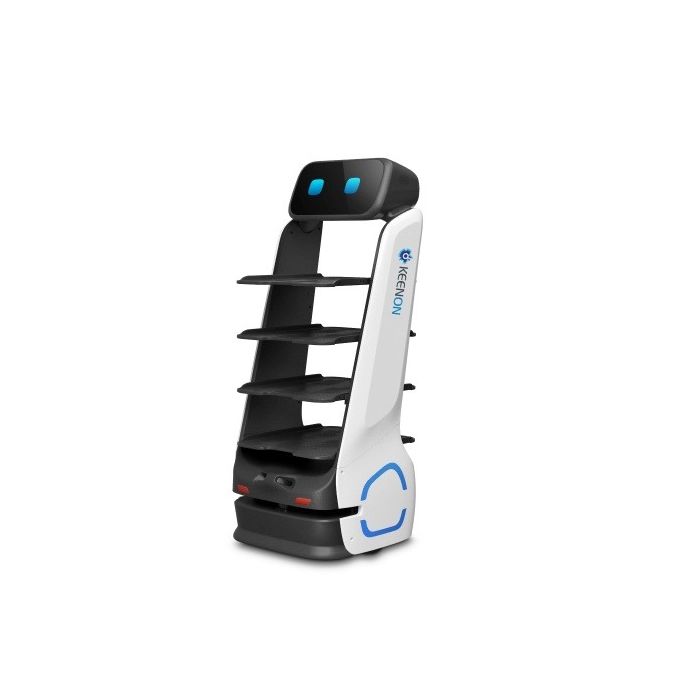
Between the pass, the dining room, and the return route, service work can lose its rhythm in small repeated trips. Keenon DINERBOT T9 High-load Capacity Restaurant Robot with 5 Year Warranty is presented in the published material as the high-load-capacity DINERBOT for daily service needs, with a reported 40kg (88lbs) total load capacity and adjustable tray spacing intended to carry multiple service items in a single run. Rather than replacing the judgement of front-of-house staff, a restaurant delivery robot in this class is normally used to move items predictably so people can stay closer to guests, tables, and exceptions.
Robots USA sells the Keenon DINERBOT T9 for commercial service automation projects and supplies it to customers in the United States. Robots USA quotes, delivers and supports the product, and can confirm the current datasheet, configuration, charging requirements, documentation, and warranty details at quotation.
Background
KEENON and service robotics
KEENON is the brand named for this product, and the manufacturer address published with the source material is Building 56, No.1000 Jinhai Road, Pudong District, Shanghai, China. In hospitality and food service settings, delivery robots are commonly selected to separate transport work from guest-facing work: staff prepare, present, clear, and communicate, while the robot handles repeatable movement through mapped areas. That general approach can be useful in restaurants, hotel dining areas, canteens, care dining rooms, and event environments where staff need a more regular flow between preparation and service zones.
Positioning of the T9
The T9 is reported as the high-load-capacity DINERBOT for daily service needs. The published specification gives the T9 a 40kg (88lbs) total load capacity, with 10kg per layer, and lists adjustable space heights of 19.5cm, 16.9cm, 25.3cm, and 22.8cm. Those figures matter because the buyer is not only asking whether a robot can move; the buyer is asking whether it can carry the practical mix of plates, bowls, trays, or service items that define a real shift. The source also reports a chassis using vehicle-grade independent suspension with shock absorption, based on CAE simulation, which is relevant to buyers comparing robots for heavier service runs and regular daily use.
Technical Specifications
| Specification | Value |
|---|---|
| Version | T9 |
| Product positioning | Reported as the high-load-capacity DINERBOT for your daily service needs |
| Dimensions (WxDxH) | Published as 50.0 x 52.7 x 126.6cm (19.69" x 20.75" x 49.84") |
| Weight | Published as 63kg (139lbs) |
| Moving speed | Published as 0.1-1.0 m/s (0.33-3.28 ft/s) |
| Battery life | Published as up to 18h |
| Battery capacity | The manufacturer has not published the battery capacity; it is confirmed at quotation |
| Slope angle | Published as 5° |
| Total load capacity | Published as 40kg (88lbs) |
| Load per layer | Published as 10kg per layer |
| Minimum passage width | Published as 70cm (27.56") |
| Adjustable tray heights | Published as 19.5cm, 16.9cm, 25.3cm, 22.8cm |
| Chassis | Reported as vehicle-grade independent suspension with shock absorption, based on CAE simulation |
| Navigation and dispatching | Reported as patented AI algorithms that optimize route planning, with multi-robot dispatching |
| Touch screen | Reported as a large touch screen at an ideal height |
| Charging pile | Reported as not included |
| Sensor types | The manufacturer has not published the sensor types; they are confirmed at quotation |
| Connectivity | The manufacturer has not published connectivity; it is confirmed at quotation |
| Operating temperature range | The manufacturer has not published the operating temperature range; it is confirmed at quotation |
| IP rating | The manufacturer has not published an IP rating; it is confirmed at quotation |
| Tray dimensions | The manufacturer has not published tray dimensions; they are confirmed at quotation |
| Display size | The manufacturer has not published the display size; it is confirmed at quotation |
| Supported languages | The manufacturer has not published supported languages; they are confirmed at quotation |
Specifications are presented as published and are confirmed against the datasheet at quotation.
How does DINERBOT T9 handle heavier restaurant service runs?
The published specification points first to carrying ability: the T9 is reported with 40kg (88lbs) total load capacity and 10kg per layer. For a service manager, that makes the robot relevant when the workflow involves more than a single plate or small tray. It can be planned as a transport layer between staff and destination points, helping reduce repeated walking on routes that are already known and repeatable.
The reported adjustable tray heights of 19.5cm, 16.9cm, 25.3cm, and 22.8cm also speak to daily operations. A restaurant does not move one fixed item all day; it may move dishes of different heights, covered items, beverage service components, or bus tubs depending on the workflow. The source does not publish tray dimensions, so Robots USA should confirm the exact tray fit against the buyer’s serviceware at quotation before the robot is specified for a particular venue.
Motion and physical fit are part of the same decision. The T9 is reported with a moving speed of 0.1-1.0 m/s (0.33-3.28 ft/s), a 5° slope angle, and a 70cm (27.56") minimum passage width. Those figures do not replace a site review, but they help a buyer screen corridors, service aisles, and ramps before a final deployment plan is made.
Who is DINERBOT T9 for?
DINERBOT T9 is for operators who want to move food, tableware, or service items through a predictable indoor service route while keeping staff focused on guests and exceptions. It is particularly relevant to restaurants with repeated kitchen-to-table or kitchen-to-station travel, hotel dining operations that need steady support during peak periods, institutional dining areas with regular meal movement, and hospitality teams assessing robotic support for multi-point service.
The published facts support the T9 when higher carried load is a major requirement, because the source reports 40kg (88lbs) total capacity and 10kg per layer. If a buyer’s main constraint is a very narrow route, a specific tray footprint, a required IP rating, a required operating temperature range, or a particular language interface, those details should be checked before purchase because the source does not publish tray dimensions, IP rating, operating temperature range, or supported languages. The supplied fact sheet names only the T9 version, so this page does not steer a buyer to another sibling version with different figures.
What is DINERBOT T9 used for?
- Food running: Moving prepared items from a kitchen, pass, or staging point toward tables or service zones.
- Table-service support: Carrying multiple service items so staff can focus on greeting, presentation, and guest interaction.
- Buffet and banquet support: Assisting with repeatable transport tasks in dining rooms where routes can be planned.
- Back-of-house to front-of-house movement: Reducing repeated walking between preparation areas and customer-facing stations.
- Multi-robot operations: Supporting larger deployments where the published material’s reported multi-robot dispatching is relevant.
- Daily hospitality transport: Handling routine carrying tasks in restaurants, hotels, canteens, and similar service environments.
Pricing and Availability
Robots USA provides pricing by quotation so the product, configuration, documentation, charging requirements, and support scope can be checked against the buyer’s site and operating needs. No price is listed here because the final quotation may depend on project requirements and the confirmed product package.
Delivery, customs and support are arranged with the quotation. The quotation request for Keenon DINERBOT T9 is available on this page.
Frequently Asked Questions
What load capacity is published for DINERBOT T9?
The published specification reports 40kg (88lbs) total load capacity and 10kg per layer. Robots USA confirms the current datasheet at quotation.
Is the charging pile included?
The source reports that the charging pile is not included. Charging requirements and the required charging accessory should be confirmed with Robots USA before ordering.
How long is the battery life?
The published material reports battery life up to 18h. The manufacturer has not published the battery capacity in the supplied facts, so capacity is confirmed at quotation.
How fast does the T9 move?
The reported moving speed is 0.1-1.0 m/s (0.33-3.28 ft/s). Actual use should be planned around the venue’s route design and operating procedures.
What navigation information is published?
The source reports patented AI algorithms that optimize route planning and support multi-robot dispatching. Sensor types and connectivity are not published in the supplied facts and should be confirmed at quotation.
What important specifications are not published?
Battery capacity, operating temperature range, sensor types, connectivity, IP rating, tray dimensions, display size, and supported languages are not published in the supplied facts. Robots USA can check those items against the manufacturer datasheet during quotation.
Where can I buy DINERBOT T9 and what does it cost?
You can request DINERBOT T9 from Robots USA. Pricing is supplied by quotation, with delivery, customs and support arranged as part of the quote.
Summary
The practical question behind a restaurant delivery robot is not whether a machine can travel across a dining room; it is whether it can carry the right service load, fit the route, and integrate into the rhythm of staff and guests. The T9’s published profile emphasizes high-load daily service, with reported 40kg (88lbs) total capacity, 10kg per layer, adjustable tray heights, a 70cm (27.56") minimum passage width, and route-planning features with multi-robot dispatching.
At the same time, several buying details still need confirmation, including charging package, battery capacity, sensor types, connectivity, IP rating, tray dimensions, display size, supported languages, and the exact warranty documentation. For buyers comparing robotic service support for restaurant and hospitality operations, Robots USA can confirm those points and prepare the quotation; this page is the starting point.